Why Places Like Kalahandi Produce Determined People
Not because hardship builds character. But because certain environments select for a specific kind of operational capacity.
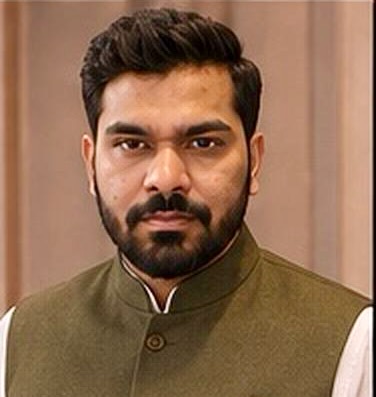
Founder, Majhi Group & Majhi OS

I have been asked, in various forms, why people from places like Kalahandi so often become unusually determined operators, why the ones who make it out tend to keep going long after most people would stop.
The honest answer is: I'm not sure the question is right.
The common explanation for why people from difficult places often become unusually effective operators is character, hardship builds resilience, adversity develops grit. The difficult path produces the stronger person. This framing is not entirely wrong. It is also not the most useful way to understand what actually happens.
Constraint is not a disadvantage. It is a different kind of training.
This explanation is flattering to everyone involved, the people who came from difficult places get to be heroes of their own story, and the listeners get a satisfying narrative arc. It is also mostly wrong, or at least incomplete in ways that matter.
The people who come from places like Kalahandi and become effective operators are not effective because difficulty shaped their character. They are effective because a particular selection process, operating across many years, filtered them toward a specific set of capabilities. Understanding the selection process is more useful than celebrating the outcome.
What the selection process looks like
Getting from a small town in interior Odisha to a position where capability becomes visible and usable requires clearing a series of specific obstacles that are simply not present in more resourced environments.
The first obstacle is family permission. In contexts where the immediate economic contribution of a child is real and significant, choosing to invest years in education rather than work is a genuine sacrifice, made by the family, not just the individual. The families that make that choice are signaling something: a longer time horizon, a willingness to accept present cost for future possibility, a belief that the path exists even when it is not visible.
The second obstacle is navigation without a map. The students who make it from Kalahandi to competitive institutions are almost always the first in their family to do so. There is no sibling who has been through the process, no parent who knows what the applications look like, no cousin who can tell you what coaching centre is worth attending. You figure it out by finding scraps of information from teachers, from distant relatives, from whoever has been through a version of the path before. This is not a minor capability. The ability to navigate an opaque process without a guide is exactly what early-stage business environments require.
The third obstacle is maintaining a multi-year focus under conditions of high uncertainty and low social proof. When nobody around you has done what you're trying to do, the belief that it is possible has to be internally generated. External validation, the peer group who is also preparing for the same exam, the parent who has done it before, the counselor who knows the path, is largely unavailable. The people who sustain focus without those inputs are not a random sample.
What this selects for
Each obstacle in that sequence selects for something specific.
The family permission obstacle selects for environments that value long-term thinking over immediate return. This value, once internalized, shows up as patience with compounding, the willingness to invest in things whose payoff is delayed.
The navigation obstacle selects for people who have learned to work from first principles rather than established procedure. When the map doesn't exist, you either give up or you reason from the territory. People who come from places like Kalahandi and make it through this phase have generally learned to reason from territory. This is a significant advantage in environments where the established procedures are wrong.
The focus obstacle selects for the ability to generate intrinsic motivation, to work toward something without the external scaffolding that most high-performing environments provide as standard. This is, in professional terms, exactly what early-stage companies need from the people who join them.
What this does not select for
It is worth being precise about what this selection process does not guarantee.
It does not guarantee technical knowledge. The person who made it through this process despite inadequate schools may know significantly less domain-specific content than a peer who had better educational infrastructure. The capability is operational, not informational.
It does not guarantee comfort in credentialed environments. The social capital that moves easily through elite institutional networks, knowing the references, reading the cultural signals, operating in the idiom, is built in those environments and often absent outside them. This is a real gap and it causes real harm when capable people get filtered out by credential-forward selection systems that cannot distinguish capability from presentation.
It does not guarantee that everyone from difficult places is operationally exceptional. Most people who grew up near Kalahandi did not clear the selection process. The capability was there in many of them. The translation layer that would have converted it into visible outcome was not.
The more useful frame
The useful insight is not that hardship produces determination. The useful insight is that specific environmental constraints, when navigated successfully, develop specific capabilities. And that selection systems which only recognize capabilities developed in privileged environments will systematically miss capabilities developed everywhere else.
I hire differently because I grew up watching what capable people look like when the translation layer between capability and recognition is absent. The person who figured out the Kalahandi path without a guide is not the same as the person who followed the well-mapped route and did fine. They are both capable, but their capability has different shapes.
The shape that comes from navigating without a map is useful in a specific class of problems: the ones where the map doesn't exist yet.
Most of the interesting problems are in that class.
The shape that comes from navigating without a map is useful in a specific class of problems: the ones where the map doesn't exist yet. Most of the interesting problems are in that class.
Manas Majhi grew up in Junagarh, Kalahandi, Odisha. He writes about opportunity, development, and the systems that fail to distribute either equitably. He is the founder of Majhi Group and Majhi OS.
See also: Kalahandi and the Opportunity Gap, Lessons From Rural India That Apply Globally, What Kalahandi Taught Me About Human Nature
Sources
World Bank: Human Capital Index 2024: India Country Profile
McKinsey Global Institute: India's Labour Market: A New Emphasis on Employability
Harvard Business Review: Hiring for Cultural Fit Doesn't Have to Mean Sacrificing Diversity
Frequently Asked Questions
Why is the 'hardship builds character' framing incomplete or wrong?
It's not entirely wrong, but it's not the most useful way to understand what actually happens. The framing is flattering to everyone involved, people from difficult places get to be heroes of their own story, listeners get a satisfying narrative arc. But it locates the explanation in character rather than in process, which means it can't tell you what specifically happened, or what to look for when hiring for the same capability. The more accurate explanation is that a particular selection process, operating across many years, filtered specific people toward specific capabilities. Understanding the selection process is more useful than celebrating the character outcome. Not everyone from a difficult place becomes operationally exceptional, most people who grew up near Kalahandi didn't clear the selection process. What the ones who did share is not that they were tougher, but that they cleared obstacles that each selected for a specific capability.
What three obstacles does the selection process involve and what does each select for?
First: family permission. In contexts where a child's immediate economic contribution is real and significant, investing years in education rather than work is a genuine sacrifice made by the family. Families that make that choice signal a longer time horizon, willingness to accept present cost for future possibility, a belief that the path exists even when it's not visible. This value, once internalized, shows up as patience with compounding. Second: navigation without a map. Students from Kalahandi who reach competitive institutions are almost always the first in their family to do so, no sibling who's been through it, no parent who knows what the applications look like. The ability to navigate an opaque process without a guide is exactly what early-stage business environments require. Third: multi-year focus under high uncertainty and low social proof. When nobody around you has done what you're trying to do, the belief that it's possible must be internally generated. People who sustain focus without external validation develop the capacity to generate intrinsic motivation, what early-stage companies need from the people who join them.
What capabilities does this selection process NOT guarantee?
It does not guarantee technical knowledge. The person who made it through despite inadequate schools may know significantly less domain-specific content than a peer with better educational infrastructure. The capability is operational, not informational. It does not guarantee comfort in credentialed environments. The social capital that moves easily through elite institutional networks, knowing the references, reading cultural signals, operating in the idiom, is built in those environments and often absent outside them. This causes real harm when capable people get filtered out by credential-forward selection systems that can't distinguish capability from presentation. And it does not guarantee that everyone from difficult places is operationally exceptional, most people who grew up near Kalahandi didn't clear the selection process. The capability was there in many of them. The translation layer that would have converted it into visible outcome was not.
Did this land? Push back? Add something I missed?
Reply to Manas →Continue Reading
Related writing
 Kalahandi
Lessons From Rural India That Apply Globally
The lessons from building in a constrained environment are not sentimental, they are structural. Resource scarcity forces prioritisation. Weak infrastructure forces self-reliance. Unreliable systems force redundancy thinking. These are the same capabilities that make companies resilient under pressure. They are just harder to develop when everything works.
 Kalahandi
Kalahandi and the Opportunity Gap
Kalahandi's opportunity gap is not a mystery. It is the predictable output of systems that allocate investment based on what already exists, not what is possible.
 Kalahandi
What Kalahandi Taught Me About Human Nature
The most useful thing a place like Kalahandi teaches you is not about the place. It is about what happens inside people when something doesn't fit their picture of what is real.