Questions I Keep Returning To
The questions that are most worth asking don't resolve. They clarify, they generate better understanding without producing a final answer. These are the ones I keep coming back to.
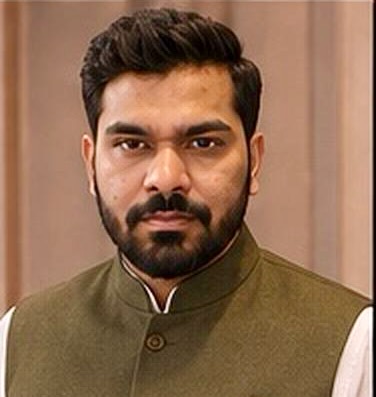
Founder, Majhi Group & Majhi OS

I have been asking myself the same question about Majhi Group for seven years: what is it that we do that nobody else does? Not the answer, that has changed several times. The act of returning to it. Every time I have drifted from that question into easier ones, the business has done worse. Every time I have sat with it honestly, something has clarified.
There is a category of question that functions differently from the ones that have answers. These questions don't resolve, they clarify. They generate better understanding of the problem without producing a final answer. The best thinking I have done has often been organised around questions of this type rather than around finding definitive answers.
There is a category of question that functions differently from the ones that have answers. These questions don't resolve - they clarify. The best thinking I have done has often been organised around questions of this type.
What follows are the questions I keep returning to. Not because I haven't tried to answer them, I have, but because the answers I've reached feel provisional and the questions keep producing new things when I revisit them.
How much of what I think I know is actually knowledge?
I have been in my industry long enough to have strong opinions. Strong opinions formed from significant experience. The opinions feel like knowledge, grounded, tested, reliable.
But I have also watched people with similarly strong opinions, formed from similarly significant experience, be confidently wrong. The experience produced the confidence; the confidence obscured the gaps in the experience. How much of what I hold with conviction is actually tested knowledge versus pattern matching from a sample that is smaller and less representative than I assume?
This question is not rhetorical. I don't know the answer. What I know is that distinguishing between genuine knowledge and well-founded intuition requires a kind of epistemic humility that is in permanent tension with the confidence required to make decisions and take positions. I navigate that tension imperfectly.
What would I be doing if I had not left Kalahandi?
Not as nostalgia, I am genuinely glad for the path I've taken. As a question about counterfactuals and about what my current position owes to specific contingencies.
If the specific teacher who saw something in me and invested disproportionate attention had not been there, or had been there but been otherwise occupied, or if the specific sequence of decisions I made early, where to apply, which opportunities to pursue, had gone differently: what would I be doing? Am I here primarily because of what I am, or primarily because of what happened to be in front of me when I needed it?
The question matters because it changes how I think about other people who are at earlier stages of the same path. If the contingency was large, if the specific teacher or the specific opportunity mattered enormously, then what I owe to people who haven't encountered that contingency is substantial. If the contingency was small and I would have gotten here anyway through different means, the obligation is different.
I don't know the answer. I think the contingency was large. I act as if it was.
What does building something that outlasts you actually require?
I am building two businesses that I want to outlast me, that I want to become institutional, not dependent on my specific presence. I know what that requires in theory: systems that work without me, culture that reproduces itself, mission that is larger than the founder.
In practice, I find myself making choices that move toward that goal and choices that move against it without always knowing which is which at the time. The temptation toward control, toward keeping the most important things requiring my specific input, is real and probably counterproductive to what I'm trying to build.
What specifically does it take to build something that doesn't need you? I return to this question when I'm making decisions about where to invest time, what to delegate, what to systematise. I don't have a complete answer. I have a working answer that is getting better.
How do I know when enough is enough?
Not a spiritual question primarily, a practical one. Enough revenue, enough clients, enough impact to stop worrying about whether the business survives. Enough success to shift from building the base to deploying what the base enables. Enough security to take the kind of risks that the current security doesn't permit.
The question is genuinely hard because enough is relative to the reference point, and the reference point keeps moving. The level of security that would have felt more than enough from Kalahandi feels less than enough now. Is this accumulation of ambition evidence of growth or evidence of a hedonic adaptation that I should be more sceptical of?
I think there is a real answer to this question and I don't currently have it. I am watching myself for signs of both, genuine progress toward something meaningful and the treadmill of moving targets. I try to stop periodically and ask: what would it feel like to be here, where I actually am? The answer is usually more positive than the forward-looking orientation allows for.
What is the right balance between influence and authenticity?
Everything I communicate publicly is shaped partly by what I actually think and partly by what I believe will land well, be useful to the right people, position the businesses appropriately. These two things usually overlap and sometimes they don't.
When they don't, when the thing I actually think is not the thing that would be most strategically useful to say, the question is what to do. Usually I lean toward saying what I think, on the calculation that authenticity compounds in a way that strategic positioning doesn't. But I also recognise that this is a convenient belief for someone who would rather say what they think than manage their message.
I don't fully trust my own answer here, which is why I keep returning to the question.
What do I owe to the places I come from?
This one I am most unsettled about. I owe something to Kalahandi, to the people and institutions that invested in me before the investment was obviously worth making. I owe something to Odisha broadly, whose human capital I drew from in building what I've built.
The question is not whether there is an obligation but what it specifically requires. Money toward institutions? Personal time and presence? Building something in the region? Public advocacy for things the region needs? All of the above and in what proportion?
I act on this in several ways. I write about Odisha and Kalahandi in ways that try to represent them accurately. I employ people from the region. I think about what Majhi OS could look like deployed for hiring in Odisha's growing economy.
I don't know if this is proportionate to the obligation. I don't have a clear way to measure proportionality. The question stays open.
See also: How to Make Decisions When You Don't Have Enough Information, How I Think About Systems, A World of Eight Billion Typists, The Question That Made Humanity Fly
Sources
Rainer Maria Rilke: Letters to a Young Poet
Nassim Nicholas Taleb: Antifragile: Things That Gain from Disorder
Frequently Asked Questions
What distinguishes questions worth keeping open from questions that should be resolved?
The questions worth returning to don't resolve neatly, they clarify rather than close. Each time you visit them you understand the structure of the question better, you see it from a different angle, you rule out some wrong answers. But the question doesn't produce a final answer that stays settled. These tend to be the most important questions: about meaning, about proportion, about what you owe and to whom.
What makes the 'how much is enough?' question genuinely hard rather than just philosophically interesting?
Because enough is relative to a reference point that keeps moving. The level of security that would have felt more than sufficient from Kalahandi feels different now. Is that accumulation of ambition evidence of growth or hedonic adaptation? There is a real answer to this question, and the honest position is not having it resolved, it requires periodically stopping to ask: what would it feel like to be here, where I actually am?
How do live questions function differently from resolved beliefs?
Resolved beliefs are conclusions you have reached and operate from. Live questions are ones you are still inside, they stay active, generate new angles as circumstances change, and prevent premature closure on something that is genuinely not settled. Keeping important questions actively open rather than prematurely resolved is a cognitive discipline, it requires tolerating the discomfort of not having an answer on things that matter.
Did this land? Push back? Add something I missed?
Reply to Manas →Continue Reading
Related writing
 Philosophy
How to Make Decisions When You Don't Have Enough Information
Most important decisions are made under uncertainty. The question is not how to eliminate uncertainty before deciding, it is how to decide well despite it.
 Philosophy
How I Think About Systems
A system is any set of components that interact to produce an output. The output is almost never what any individual component intended. This is why fixing individual components rarely fixes the output, and why thinking in systems is a different kind of intelligence than thinking about things in isolation.
 Philosophy
The Question That Made Humanity Fly
History remembers the airplane. It should remember the question. The Wright brothers didn't out-build their rivals, they out-questioned them, and that difference is the real story worth learning from.