What Travel Has Taught Me
Travel doesn't primarily teach tolerance or perspective or humility; that's what travel writing claims. What it actually teaches is more specific: that most of the certainties you carry about how the world works were assembled from a very small sample.

Founder, Majhi Group & Majhi OS
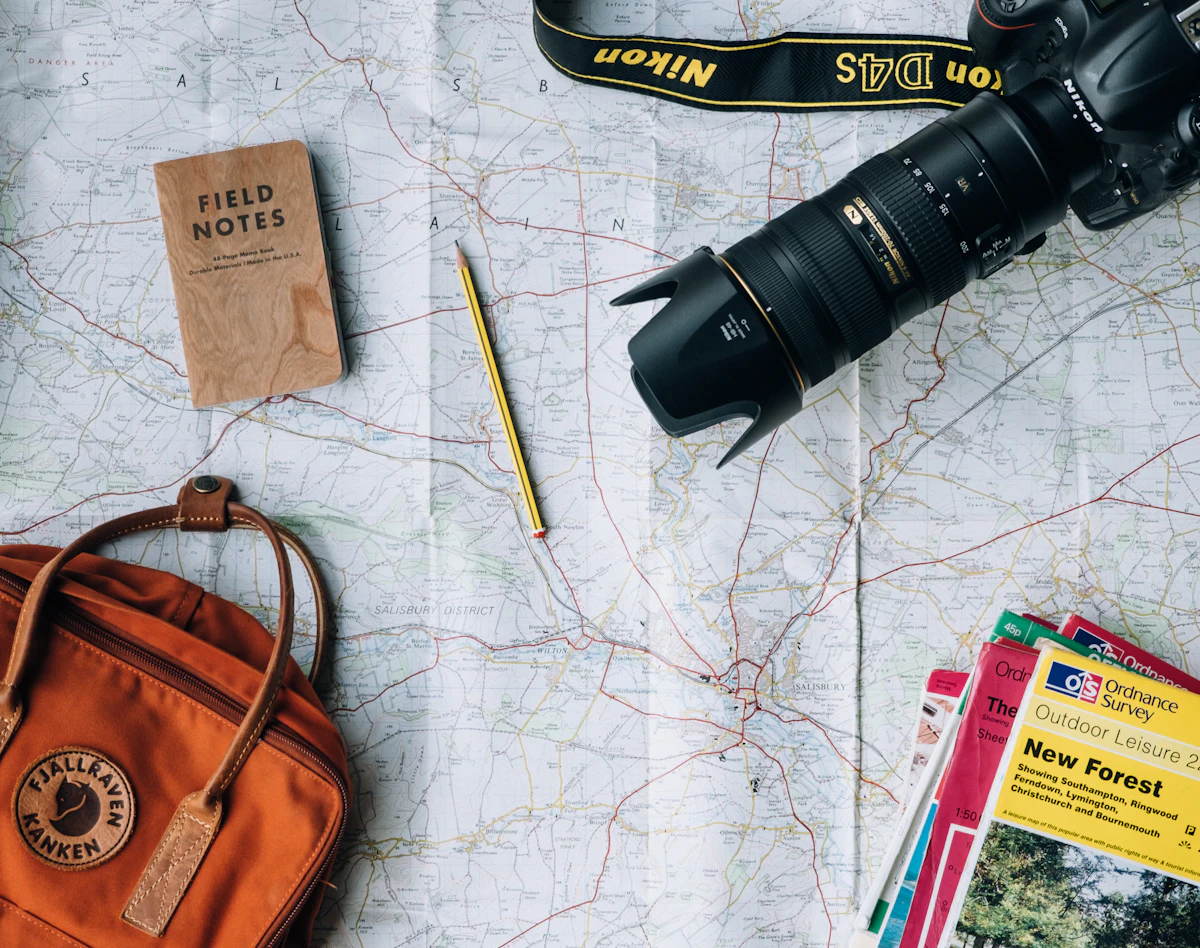
I have spent a significant portion of my adult life in transit: airports, hotels, meeting rooms in cities I am visiting for the first time, or the tenth time in a different context. What this has produced is not primarily an accumulation of destinations. It is a habit of noticing that I did not have before I started traveling, and that I cannot easily turn off now.
The habit is this: when something doesn't fit my model of how the world works, I pay attention. Travel produces a constant supply of things that don't fit. That is most of what it has taught me.
That your model is wrong in specific ways
The most useful thing travel does is reveal the specific shape of your assumptions. You don't know what you assume until you go somewhere where the assumption breaks.
I assumed that certain social hierarchies were natural, that the deference I saw in India was a feature of Indian culture rather than a feature of specific power distributions that could be organized differently. Going to places with different power distributions revealed the assumption. I assumed that certain approaches to work, the pace, the communication style, the relationship between professional and personal, were the logical approach rather than a particular cultural option. Being in places where they were organized differently revealed that they were choices, not inevitabilities.
This is simultaneously uncomfortable and useful. Discovering that your model is wrong in specific ways tells you where to look for updates. It doesn't tell you which model to replace it with: that requires more observation. But it breaks the closed loop of living only among people who share your model and therefore never challenging it.
That most people everywhere are trying to solve the same problems
Across the range of places I have traveled, different countries, different economic conditions, different cultural contexts, the underlying concerns of ordinary people are remarkably consistent. Security for their families. Enough for their children to have better options than they had. Health. Respect from the people around them. Work that is worth doing.
The specific forms these take vary enormously. The specific institutions that organize them vary. The specific strategies people use to pursue them vary. But the concerns themselves are more constant than the differences between places suggest.
This is useful practically: it means that understanding what a person is trying to accomplish, not what they are doing, creates a basis for communication that transcends whatever is different about the contexts you each come from. The approach to relationship that works in Lagos and the approach that works in Singapore look very different on the surface. What they share is that they are both organized around the same underlying human concerns, navigated through different cultural infrastructure.
That the most important things are often invisible to outsiders
The things that matter most in any place are usually not in the places tourists look. Not in the landmarks or the famous restaurants or the curated experiences. They are in the ordinary economy: the daily commerce, the neighbourhood relationships, the informal systems through which things actually get done.
I have learned more about a city from walking through its wholesale markets at 5am than from any amount of time in its tourist-facing economy. More from sitting in an ordinary restaurant where locals eat at ordinary prices than from the recommended places where the food is designed for visitors. More from a long conversation with a driver or a shopkeeper than from a guidebook.
This is not romanticism about the "authentic" as opposed to the curated. It is an observation about where information density is highest. The curated experience has been processed to remove surprise. The ordinary, un-processed experience hasn't.
That adaptability is a learnable skill
The first time you are somewhere completely disorienting, where the language is opaque, the customs are unfamiliar, the food is unexpected, the social signals you normally read automatically are illegible, it is uncomfortable. The second time it happens, it is slightly less uncomfortable. After enough times, a specific competence develops: the ability to function, to navigate, to find the relevant information and the relevant people, in environments where your prior knowledge provides little scaffolding.
This is transferable. The executive who has had to navigate an unfamiliar cultural environment, figure out who to talk to and how to approach them, and build enough trust to get things done is doing the same cognitive work in a business context. The founder who has entered a market they didn't grow up in and figured out how to operate within its norms is exercising the same muscle. Travel builds the muscle in low-stakes conditions where the cost of error is a missed connection or a bad meal rather than a failed deal.
That physical presence reveals things no remote access can
There is a class of information that cannot be transmitted remotely: that requires being in the physical place to acquire. The texture of a city at a specific hour. The body language of a negotiation. The difference between how something looks in a presentation and how it functions in practice. The mood of a market. The actual quality of an infrastructure that looks impressive in photographs.
Travel is partly about acquiring this non-transmissible information. The business meeting that could have been a video call often couldn't be, not because the content of the conversation required physical presence but because the confidence and relationship that make the content credible require it. This will probably change over time as remote presence technology improves. It hasn't changed yet.
What it has not taught me
Travel has not made me without roots. The places I have been and the things I have seen have made my understanding of where I come from sharper, not looser. Every other city I have spent time in has clarified something about Kalahandi, about Odisha, about the specific texture of the world I grew up in. The clarity came from the contrast.
It has also not made me cosmopolitan in the sense of belonging everywhere and nowhere. I have a home. Travel has made me more useful in more contexts. It has not made me home-less.
The balance, being genuinely rooted somewhere and genuinely capable of functioning somewhere else, is, I think, the most durable thing travel builds. Neither rootlessness nor parochialism. The ability to go, to pay attention, and to come back knowing something you didn't before.
Every other city I have spent time in has clarified something about Kalahandi, about Odisha, about the specific texture of the world I grew up in. The clarity came from the contrast.
See also: Places That Changed How I Think, Travel as a Learning System, Lessons from Airports
Frequently Asked Questions
What is the most practically useful thing travel has taught Manas?
That most of the certainties he carried about how the world works were assembled from a very small sample, and that discovering where the model is wrong in specific ways tells you exactly where to look for updates. Not that everything is relative, but that specific assumptions are context-dependent. Travel surfaces those specific assumptions with precision that staying inside your own context never can.
What has travel taught Manas about the similarity of people across very different places?
That the underlying concerns are more constant than the differences between places suggest. Across different countries, economic conditions, and cultural contexts, the same things matter: security for families, better options for children, health, respect, work worth doing. The specific forms vary enormously. The concerns don't. This creates a basis for communication that can transcend surface difference: because the underlying thing being communicated about is shared.
How has travel affected Manas's relationship with Kalahandi and Odisha?
It clarified it rather than loosened it. Every other city he has spent time in has sharpened something specific about where he came from. The clarity came from the contrast. He is not rootless, he has a home, but he can function in more contexts than he could before. The balance of genuine rootedness and genuine capability is what he thinks travel, at its best, actually builds. Neither parochialism nor belonging nowhere.
Did this land? Push back? Add something I missed?
Reply to Manas →Continue Reading
Related writing
 Travel
Places That Changed How I Think
Not every place you visit changes anything. A few do, not because of what they look like but because of what they make visible that was invisible before. These are the ones that changed something specific.
 Travel
Travel as a Learning System
Most people treat travel as consumption: experiences to accumulate, places to check off. The people who extract the most from it treat it as a system: deliberate inputs, structured observation, intentional extraction of what is transferable. The difference in output is large.
 Travel
What Home Looks Like From Far Away
Distance clarifies things that proximity obscures. The place you grew up looks different from London than from Bhawanipatna. Not because it has changed; because you have a reference point now, and the reference point changes everything you see.