A Love Letter to Odisha
The state I grew up in shaped how I think about ambition, possibility, and the gap between potential and outcome.
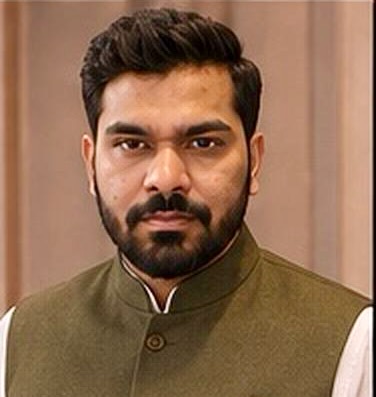
Founder, Majhi Group & Majhi OS

I left Odisha at eighteen, the way many people from Odisha leave: with a scholarship to somewhere better, a family that had made real sacrifices to create that possibility, and the complicated mixture of gratitude and guilt that characterises first-generation departure from a place you love and cannot fully stay in.
I grew up in Junagarh, a town in Kalahandi. The smell of the town in the first hour of rain on dry earth is one of those sensory memories I carry everywhere, petrichor over laterite, the specific colour the sky goes before a monsoon breaks. The morning sounds of a town where everyone knows everyone. The particular quality of quiet in a place that has not yet been absorbed into the noise of a city.
I left because everything I wanted to build required me to. And I have been leaving and returning ever since. Each return teaches me something about where I came from that the leaving made invisible.
What Odisha is
Odisha is a state of approximately 46 million people on the eastern coast of India, bordered by the Bay of Bengal to the east and forested hills to the west. It has natural wealth, coal, iron ore, bauxite, that has made it important to India's industrial development while not making Odishans particularly wealthy. It has cultural wealth, the Konark temple, the Jagannath tradition, one of the oldest surviving artistic traditions in India, that most of the world has never encountered. It has a coastline that should be one of the great tourism destinations of South Asia.
It also has persistent poverty metrics that put it among the lower half of Indian states, a talent outflow that takes its most educated people to Bangalore, Hyderabad, and Pune, and an institutional capacity that has improved but lags what the state's natural and human endowments should have produced.
This gap, between what Odisha is and what it could be, is the central tension I carry from having grown up there.
What it gave me
Growing up in a place that was not at the centre of things taught me something that I did not fully appreciate until I left: the experience of wanting something that your immediate environment cannot provide is an education in motivation that more abundant environments do not produce.
Ambition formed differently where I grew up. It was not ambient, not the natural result of being surrounded by people who were achieving things and an ecosystem that made achievement visible and legible. It was made, deliberately, out of a combination of specific examples (the teacher who had done something, the relative who had gotten out), a family that treated education as a survival strategy, and a self-consciousness about the distance between where I was and where I wanted to be.
I remember the moment I understood that distance was not permanent. A relative came back from Bhubaneswar having passed a competitive exam. The room he walked into changed when he entered it, not because of what he said, but because of what his presence meant. That the path was real. That it was possible to go from Junagarh to somewhere else and come back changed.
Growing up in a place that cannot give you what you want is an education in wanting. Most people who grew up in the same conditions were held back by them. The asset is not the difficulty. It is a specific response to it.
I am not romanticising constraint. Most people who grew up in the same conditions were held back by them. The asset is not the difficulty, it is a specific response to the difficulty that I was fortunate enough to develop.
What I carry from Odisha is a quality of groundedness, a sense of where things come from and what they cost, that the environment produced and that I would not trade.
What I want for it
I want Odisha to be a place that people can build a life in, rather than a place they leave to build a life elsewhere.
Not because leaving is wrong, leaving has been the right decision for many people, including me, but because a state that consistently exports its most capable people is missing something important. The ecosystem that talented people build when they stay, the institutions, the businesses, the mentorship networks, the cultural density, is not produced when they leave. The absence compounds over time.
A state that consistently exports its most capable people is missing something important. The ecosystem that talented people build when they stay is not produced when they leave.
The conditions for this are becoming more possible. Remote work has changed the calculus. Infrastructure has improved. The cost difference between building in Bhubaneswar versus Bengaluru has narrowed. There are founders and professionals who are choosing to build in Odisha in ways that would have been harder to sustain a decade ago.
This is early and fragile. What would make it durable is investment, in quality of life, in institutional capacity, in the specific things that make a place attractive enough that choosing to stay feels like a reasonable decision rather than a sacrifice.
I spend more time now thinking about what that investment looks like, and where I can contribute to it, than I did when I first left. The love letter got clearer with distance.
See also: The Odyssey of Odisha, Showing Friends Around Odisha, Why I Keep Talking About Odisha
Sources
McKinsey Global Institute: India's Turning Point: An Economic Agenda for the Decade
World Bank: Human Capital Index 2024
Observer Research Foundation: Odisha's Development Trajectory
Frequently Asked Questions
What is the gap between Odisha's potential and its current development outcomes?
Odisha has significant natural wealth, coal, iron ore, bauxite, and cultural wealth that most of the world has never encountered, plus a coastline that should make it one of South Asia's great tourism destinations. Yet it has persistent poverty metrics in the bottom half of Indian states and a talent outflow that routes its most educated people to Bangalore, Hyderabad, and Pune. The gap between what Odisha is and what its endowments should have produced is the central tension for anyone who grew up there. It reflects not an absence of inputs but a structural failure to convert those inputs into retained prosperity.
Why do talented people consistently leave Odisha rather than build there?
The leaving is rational: the ecosystem that talented people build when they stay, institutions, businesses, mentorship networks, cultural density, has not been sufficiently developed to retain people at the level the opportunities elsewhere offer. A state that consistently exports its most capable people is missing something important. The absence compounds over time. The people who left don't build the businesses that would give the next generation a reason to stay. The cycle continues. What would break it is investment in quality of life, institutional capacity, and the specific things that make choosing to stay feel like a reasonable decision rather than a sacrifice.
How is remote work changing whether Odisha-born professionals can stay or return?
Remote work has changed the calculus in meaningful ways. Infrastructure has improved, and the cost difference between building in Bhubaneswar versus Bengaluru has narrowed. There are now founders and professionals choosing to build in Odisha in ways that would have been harder to sustain a decade ago, when leaving was the only realistic path to a professional career at a certain level. This is early and fragile. What would make it durable is investment in quality of life and institutional capacity, not just connectivity. The connectivity closes the information gap; it doesn't by itself create the economic density that makes staying the obvious choice.
Did this land? Push back? Add something I missed?
Reply to Manas →Continue Reading
Related writing
 Odisha
The Odyssey of Odisha
If you grew up in Odisha, you know someone who left. Maybe it was you. What it means to love a place that made you leave, and whether that is beginning to change.
 Odisha
Showing Friends Around Odisha
When someone from outside sees your home for the first time, you see it differently too.
 Odisha
Why I Keep Talking About Odisha
People sometimes ask why I spend so much time talking about a state most of the world cannot find on a map. The answer is about identity and responsibility.