Bhubaneswar: Can It Become an AI City?
Bhubaneswar has the talent pipeline, the cost structure, and the infrastructure foundation. The question is whether it can generate the ecosystem gravity that converts those inputs into an AI city.

Founder, Majhi Group & Majhi OS
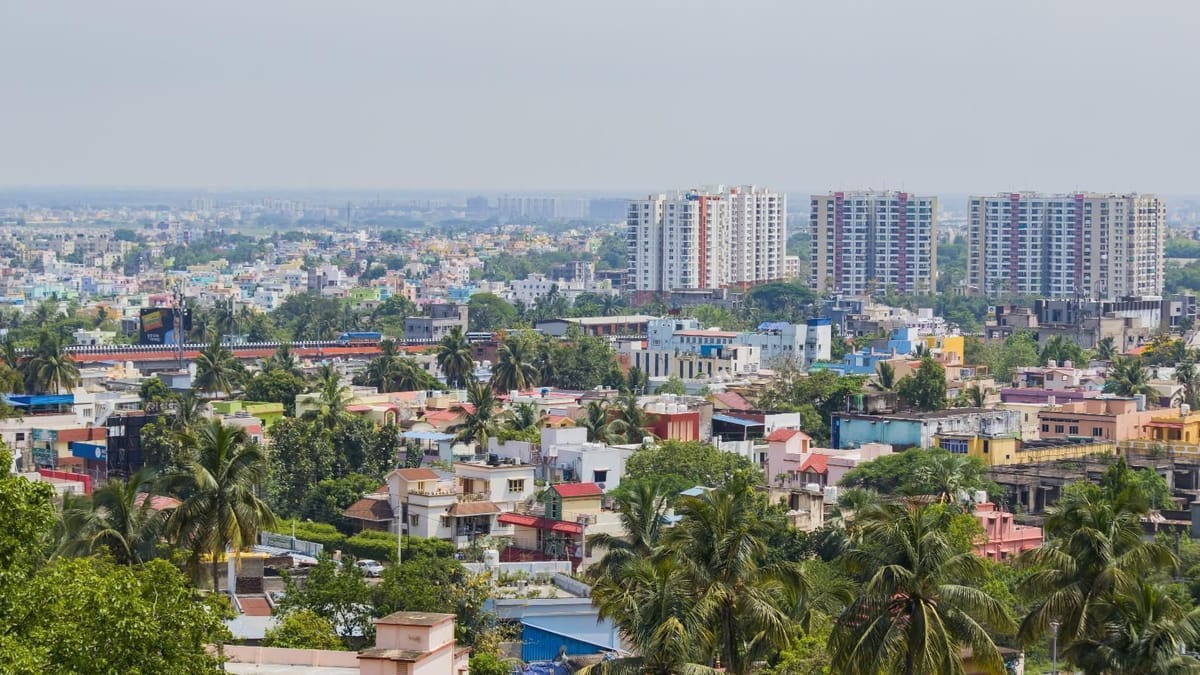
Bhubaneswar is already a tech city. That is the starting point, not the conclusion. The Software Technology Parks of India node has been operational here since 1991, earlier than most Indian cities that now carry more prominent technology reputations. Infocity, the dedicated IT park, has been drawing mid-size technology operations for two decades. KIIT University has approximately 30,000 students enrolled across all programs, one of India's largest private universities by total enrollment, with a large engineering and technology cohort graduating each year. Wipro, Infosys, TCS, and Zensar have established presences. The cost structure sits well below Bengaluru and Hyderabad equivalents.
A city that has been building technology infrastructure for thirty years is not starting from zero. The question is whether the next phase, AI-native companies, machine learning infrastructure, applied research institutions, the specific ecosystem components that would make an AI company choose Bhubaneswar over an alternative, is achievable. And what it would take.
What a tier-2 tech city actually means
The phrase "tier-2 tech city" is used in India to describe cities that have technology ecosystems but not the gravitational pull of Bengaluru or Hyderabad or Pune. What it actually describes is a city that has the inputs, talent, infrastructure, cost structure, without the compounding effects that come from ecosystem density.
Bengaluru is not a better city to build a technology company in because it has better infrastructure than Bhubaneswar. It is better because it has more companies, which means more engineers who have worked at those companies, which means more people who know how to build what you're trying to build, which means more capital from people who have made money from those companies, which means more ambition from people who have seen what ambition can produce.
This is a compounding dynamic. It took Bengaluru decades to reach its current state, and it took triggers, the early Infosys and Wipro decisions, the specific government policies of the 1990s, the physical concentration of talent in a single geography, that were partly deliberate and partly fortuitous.
Bhubaneswar is behind that curve. The question is whether it is on the curve at all.
The talent case
The talent pipeline is real and underrated.
KIIT and IIIT Bhubaneswar produce a significant volume of engineering graduates annually. IIT Bhubaneswar, still establishing itself but with the institutional credibility of the IIT network, adds a different tier of output. The students coming out of these institutions are, in aggregate, competitive with students from equivalent institutions anywhere in India.
What is less developed is what happens to them. A significant proportion leave, to Bengaluru, Hyderabad, Pune, not because they would prefer to but because the density of opportunity in those cities makes staying in Bhubaneswar feel like a step down. The city produces talent that other cities convert into ecosystem.
This is the core problem with tier-2 tech cities, stated plainly: they invest in talent production and export the output to places with more developed ecosystems. The talent is the asset; the city is not capturing the compounding.
An AI city requires a different dynamic. It requires anchor companies that keep senior engineers in the city. It requires career paths that don't require leaving. It requires the specific signal, visible to a 22-year-old making a decision about where to build a career, that staying here is not a compromise.
The infrastructure that already exists
STPI Bhubaneswar established early and has grown. The Infocity corridor has functional tech park infrastructure. The Smart Cities Mission investment has improved urban infrastructure in ways that matter to knowledge workers: connectivity, transit, urban livability. AIIMS Bhubaneswar has upgraded healthcare access. The airport has expanded.
What the city has built is the infrastructure substrate, the conditions under which a tech ecosystem can function. What it has not yet built is the institutional density that makes the ecosystem self-reinforcing.
A specific gap: AI infrastructure. Data centres, GPU compute capacity, the specific physical infrastructure that AI training and inference requires, are concentrated in a small number of Indian cities. Bhubaneswar is not yet one of them. This is not a permanent condition, it is a capital allocation decision that has not yet been made. But it matters for the AI city question specifically. AI companies require compute infrastructure that is proximate, affordable, and reliable. The absence of this in Bhubaneswar creates a friction that has to be overcome by other advantages.
What "AI city" actually requires
The phrase gets used in India to describe cities that are investing in AI policy, AI education programs, and AI-themed industrial parks. Most of what is described under this label is not an AI city, it is a city with AI branding.
An actual AI city has specific characteristics. It has a concentration of AI-native companies, companies whose core product is built on machine learning, not companies that have added AI features to existing products. It has applied research institutions that are producing work that those companies can use. It has the career infrastructure, senior AI roles, competitive compensation, visible paths to seniority, that retains AI-focused engineers rather than exporting them. And it has the capital infrastructure, investors who understand AI businesses, who have made and lost money in the sector, who can evaluate what is being built with real sophistication.
By this definition, there are very few genuine AI cities in India. Bengaluru is closest. Hyderabad is building one. The others are varying distances behind.
Bhubaneswar's path to this list is not through competing directly with Bengaluru on the same terms. It is through a specific bet: that the next phase of AI development in India will distribute across more cities than the current phase, and that a city with existing talent infrastructure, a cost advantage, and deliberate policy investment can be a destination for that distribution.
This bet is not irrational. The history of technology ecosystems in India is a history of distribution, from a handful of cities in the 1990s to a much larger set today. The cities that benefited from each phase of that distribution did so because the conditions were in place when the capital started looking for new locations.
The honest answer
Bhubaneswar can become a serious technology city. It is already one in partial form. Whether it becomes an AI city specifically depends on decisions that haven't been made yet, about compute infrastructure, about anchor AI companies, about the specific policy interventions that would make it a preferred location rather than a default alternative.
The talent is there. The cost structure is there. The foundational infrastructure is there.
What is not yet there is the trigger, the specific set of decisions that tips a city from a place where technology companies can function into a place they choose first. That trigger is not inevitable. It requires active investment in the specific things that are missing, not passive confidence that what exists is sufficient.
The window is open. It will not stay open indefinitely. The cities that become AI destinations in this decade will be the ones where that investment happens while the cost structure still makes the bet worthwhile.
Bhubaneswar is on the list of places where that bet makes sense. Whether it makes the list of places where the bet gets made is still to be determined.
The window is open. It will not stay open indefinitely. The cities that become AI destinations this decade will be the ones that invested while the cost structure still made the bet worthwhile.
See also: Odisha AI Ecosystem: Where It Stands and Where It's Going, Odisha Technology Ecosystem, Odisha Is Building the Wrong Transport System, How Odisha Has Changed in the Last Twenty Years
Sources
NASSCOM: India's Tech Ecosystem: State of the Industry 2024
McKinsey Global Institute: India's Turning Point: An Economic Agenda for the Decade
LinkedIn Talent Solutions: India Talent Insights: Engineering and Technical Roles
Frequently Asked Questions
What technology infrastructure does Bhubaneswar already have as a starting point?
More than most people realise. STPI Bhubaneswar has been operational since 1991, earlier than many cities that now carry more prominent technology reputations. Infocity, the dedicated IT park, has been drawing mid-size technology operations for two decades. KIIT University has approximately 30,000 students enrolled across all programs, one of India's largest private universities by total enrollment, with a large engineering and technology cohort graduating each year. Wipro, Infosys, TCS, and Zensar have established presences. The cost structure sits well below Bengaluru and Hyderabad equivalents. A city that has been building technology infrastructure for thirty years is not starting from zero, the question is whether the next phase is achievable.
What specifically is missing for Bhubaneswar to become a genuine AI city rather than a tech-branded city?
Three things that don't yet exist at adequate scale. First, AI infrastructure: data centres, GPU compute capacity, and the specific physical infrastructure AI training and inference requires are concentrated in a small number of Indian cities, and Bhubaneswar is not yet one of them. Second, AI-native companies: the distinction between companies whose core product is built on machine learning versus companies that have added AI features to existing products, Bhubaneswar has the latter but not the former at meaningful scale. Third, capital infrastructure: investors who understand AI businesses and can evaluate what is being built with sophistication. The talent pipeline is real. The ecosystem layer is what's missing.
What would trigger the transition from a tech services city to an AI destination?
A specific bet needs to be taken: that the next phase of AI development in India will distribute across more cities than the current phase, and that a city with existing talent infrastructure, a cost advantage, and deliberate policy investment can be a destination for that distribution. The trigger is not passive, it requires active investment in compute infrastructure, anchor AI companies in specific verticals where Bhubaneswar has differentiated advantage (agriculture, disaster management, healthcare, Odia language), and policy incentives analogous to what Telangana did to attract data center and cloud investments. The window is open. It will not stay open indefinitely.
Did this land? Push back? Add something I missed?
Reply to Manas →Continue Reading
Related writing
 Odisha
Odisha AI Ecosystem, Where It Stands and Where It's Going
Odisha is not yet in the conversation about India's AI ecosystem. It should be. The inputs are strong, technical talent, cost structure, government intent, institutional density. What's missing is capital, senior AI talent, and a visible first win.
 Odisha
Paradip: The Port Odisha Has Not Captured
Paradip Port is India's largest port by cargo volume, handling over 150 million metric tonnes annually. It sits on Odisha's coastline, routing the state's mineral wealth to the world. And yet Odisha remains one of India's least economically developed states. That gap between what Paradip handles and what Odisha captures is the central strategic question of Odisha's economic future.
 Odisha
Odisha Is Building the Wrong Transport System
The debate in Odisha is Metro vs MRTS. That is the wrong question. The right question is: what transport system does a multi-city $500 billion economy actually need?