What Missed Opportunity Actually Costs
The cost of a blocked path is not just borne by the person it blocks. The world pays too: in the things that never get built, the problems that stay unsolved, the potential that never compounds.

Collection
On how opportunity shapes lives, societies, and the arc of human progress.
19 pieces
The cost of a blocked path is not just borne by the person it blocks. The world pays too: in the things that never get built, the problems that stay unsolved, the potential that never compounds.
When you are the first person from your background to reach a certain room, you carry something that wasn't handed to you. What you do with it is a choice, and it matters more than most people acknowledge.
OpportunityMost opportunity doesn't fail because it doesn't exist. It fails because the people who need it most don't know it's there. Information is the invisible infrastructure of opportunity.
Where you are born is still the single most powerful predictor of what becomes available to you. Not because of difference: because of distribution.
The optimistic case for AI is that it distributes opportunity by making powerful tools accessible to everyone. The pessimistic case is that it concentrates opportunity by accelerating the advantage of those who already have it. Both are happening. The question is which one is winning.
The network you were born into is not something you built. It's something you inherited. For first-generation professionals, understanding this distinction changes everything about how you navigate the world.
Not luck. Not access. Not advantage. Opportunity is a condition: the coincidence of capability, information, and the absence of a blocking constraint. Understanding what it actually is changes how you design systems to create more of it.
Opportunity does not arrive and depart in single moments. It accumulates, or it doesn't. The same mechanism that builds generational advantage also builds generational disadvantage. Understanding the compounding effect changes what interventions actually matter.
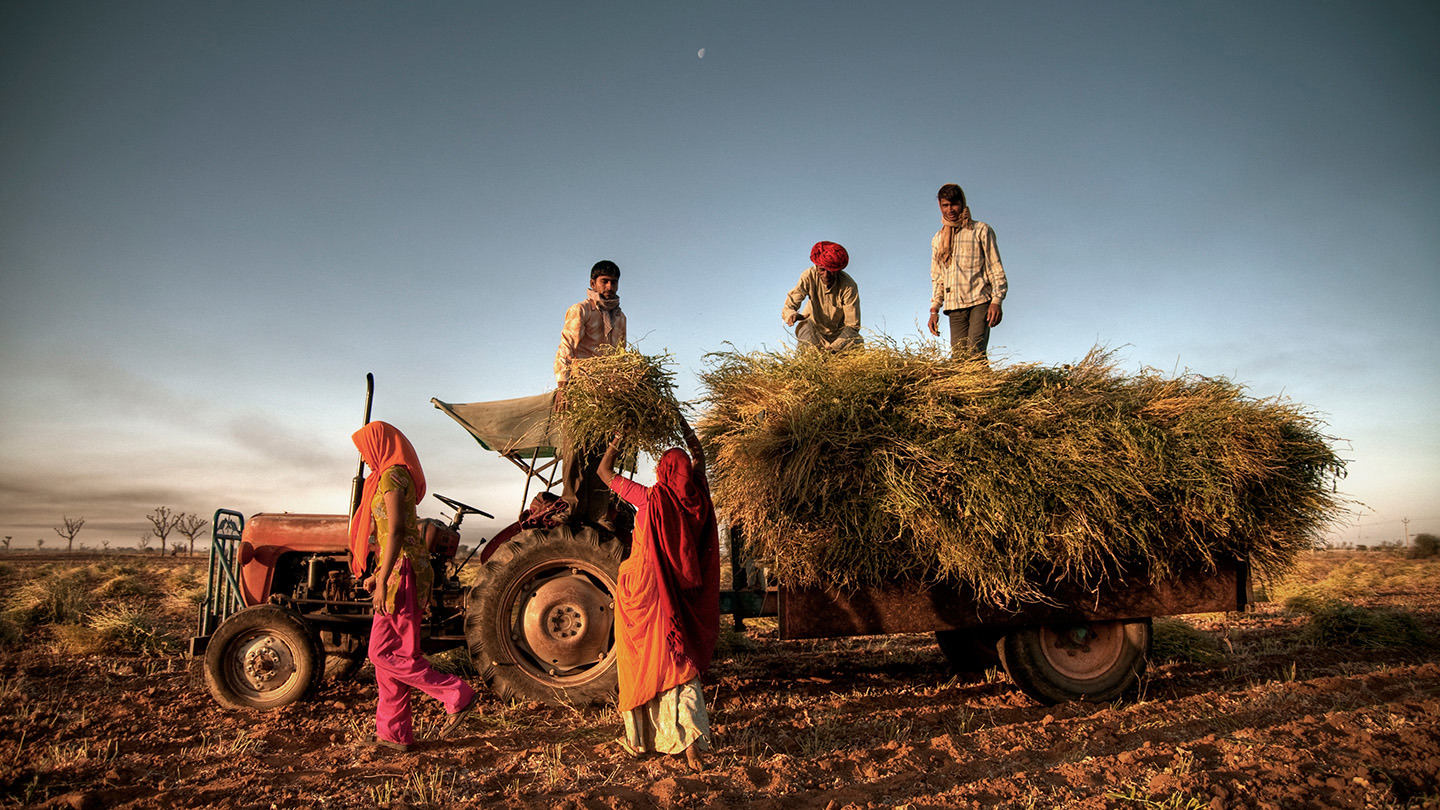
OpportunityRural India is not a single place. It is several hundred thousand distinct places, with different geographies, different crops, different castes, different distances from the nearest town with a decent school. The opportunity problem is as varied as the terrain.
Opportunity doesn't appear randomly. It is the output of specific systems, some public, some private, some informal, that create the conditions under which capability connects to possibility. Understanding what those systems are and how they work is the starting point for building more of them.
Opportunity doesn't only fail to form: it gets actively destroyed. The mechanisms are specific and mostly structural: credentialism that blocks by requirement rather than relevance, discrimination that reroutes by identity, extractive institutions that take rather than build. Understanding them is the first step to dismantling them.
OpportunityThere is a version of success that is purely personal: built on your own capability, captured for yourself, spent on your own life. And there is a version that compounds outward. The difference is not generosity. It is whether you understand what actually moved the needle for you.
The mechanism by which opportunity changes a life is simple and well understood. The mystery is not how it works, it's why every system we've built to distribute it reliably does the opposite of what it claims to do.
OpportunityIndia is not a uniform opportunity landscape. It is a country of extraordinary concentration alongside extraordinary absence: where the same decade produces world-class engineers and districts with no functional schools. Understanding that distribution is the beginning of understanding what opportunity in India actually means.
Being the first in your family to enter a profession is not just a personal milestone. It is a specific structural position that comes with specific advantages and specific disadvantages that most people in that position don't have language for until years later.
Opportunity gaps are not random and they are not primarily caused by individual failure. They cluster because systems create them predictably, and the interventions aimed at closing them keep failing because they address the symptom rather than the structure.
Talent is distributed by biology. Opportunity is distributed by geography, networks, and timing. The gap between them is not a talent problem: it is a systems problem. And it has specific, tractable solutions that most institutions aren't building.
OpportunityThe talent gap is largely fictional. The opportunity gap is real, and it compounds in ways most systemic interventions don't account for, because they solve for access without solving for what makes access convert into outcomes.
Growth that people cannot participate in is not development. India is learning this distinction in real time.