Opportunity and Mobility in Modern India
Growth that people cannot participate in is not development. India is learning this distinction in real time.

Founder, Majhi Group & Majhi OS

I left Junagarh at eighteen. The mobility I found in the move, to Bhubaneswar, eventually to the world, was real. So was the mobility I did not find: the kind that would have let me build what I built without leaving, without cutting the thread that connected me to the place I came from.
That second kind of mobility, the ability to stay and still arrive, is what this essay is about.
There is a version of development that looks impressive on paper and changes very little on the ground. GDP climbs. Exports grow. Infrastructure gets built. But the people who most need to move, economically, geographically, socially, stay where they are. India has been navigating this tension for decades. And in the last fifteen years, something has genuinely shifted. The question worth asking is whether the shift is deep enough.
What mobility actually requires
Economic mobility is often discussed as though it is primarily a function of education and effort. Study hard, work hard, rise. The meritocracy story.
The reality is more layered. Mobility requires several things to be true simultaneously: the person must have the skills, the information about where opportunities exist, the networks to access them, the financial cushion to relocate or wait, and the absence of structural barriers that block entry regardless of capability.
Remove any one of these and the chain breaks. India has historically struggled with all five, to varying degrees, depending on who you are and where you were born.
What has genuinely changed
Three things stand out.
The first is connectivity. The Jio expansion after 2016 put affordable internet in the hands of hundreds of millions of people who had never had it. This sounds like a telecom story, but it is really a mobility story. Information is the first requirement for opportunity, and information is now accessible in a way it simply was not before.
The second is digital public infrastructure. UPI, Aadhaar, and the stack built around them have made it possible for people to participate in the formal economy without the traditional gatekeepers: bank branches, physical paperwork, intermediaries who charged for access. A street vendor in Bhubaneswar can now receive payments digitally and build a transaction history that could one day support a credit application. That is not a small thing.
The third is urbanization combined with remote work. India's tier-2 and tier-3 cities are growing rapidly, and the pandemic demonstrated that location does not need to determine professional ceiling the way it once did. Someone in Raipur can now do work that would previously have required them to move to Bengaluru.
Where the gaps remain
None of this means the problem is solved. The gaps that remain are significant.
Education quality is deeply uneven. The credential exists in more places, but the actual capability it certifies varies enormously. A degree from a premier institution is not the same product as a degree from an institution no one has heard of, and employers know it, which means the filtering happens before effort can demonstrate itself.
The last mile of opportunity remains broken for a specific population: people in deep rural areas, women from conservative households, first-generation workers with no professional networks, people from communities that have historically been excluded from the formal economy. The platforms and infrastructure exist. The access does not.
And credit remains a structural barrier. The ability to take risk, to relocate, to invest in a course, to start something, requires financial slack. Most Indians at the lower end of the income distribution have none. The smallest setback can make the next step impossible.
The honest assessment
India's trajectory on opportunity and mobility is better than it has ever been. That is not nothing. The systems being built, digital, physical, institutional, are real, and they are reaching people they would not have reached before.
But the pace of inclusion does not match the pace of growth. The people at the top of the income distribution are seeing their opportunities expand rapidly. The people at the bottom are seeing theirs expand slowly, unevenly, and with significant precarity.
The goal of development is not a rising GDP. It is rising participation in that growth. India is not there yet. The honest thing to say about modern India is that it is building the infrastructure for broad-based mobility without yet having achieved it. That gap, between the infrastructure that exists and the participation it enables, is where the most important work still sits.
Growth that people cannot participate in is not development. India is building the infrastructure for broad-based mobility without yet having achieved it. That gap is where the most important work still sits.
See also: Opportunity in Rural India, Opportunity Gaps: Where They Exist and Why, Opportunity in India
Sources
World Bank Human Capital Index 2024
McKinsey Global Institute, India's Opportunity: Unleashing the Economy's Potential
Frequently Asked Questions
What five conditions does economic mobility actually require?
Skills, information about where opportunities exist, networks to access them, financial cushion to relocate or wait, and the absence of structural barriers that block entry regardless of capability. Remove any one and the chain breaks. India has historically struggled with all five to varying degrees depending on who you are and where you were born.
What three structural shifts genuinely changed India's opportunity landscape after 2015?
Connectivity: Jio's expansion democratised internet access, which is fundamentally a mobility story since information is the first requirement for opportunity. Digital public infrastructure: UPI and Aadhaar created pathways into the formal economy bypassing traditional gatekeepers. And the combination of urbanisation with remote work capability, where location no longer determines professional ceiling as it once did.
What are the two most persistent gaps in India's opportunity landscape despite decades of growth?
Education quality at scale: the disconnect between credential and capability means the primary mobility mechanism partially fails, and social constraints on women. India's women's labour force participation remains lower than comparable economies and has barely moved despite sustained growth, representing the largest single suppressor of human potential in the country.
Did this land? Push back? Add something I missed?
Reply to Manas →Continue Reading
Related writing
 Opportunity
Opportunity in Rural India
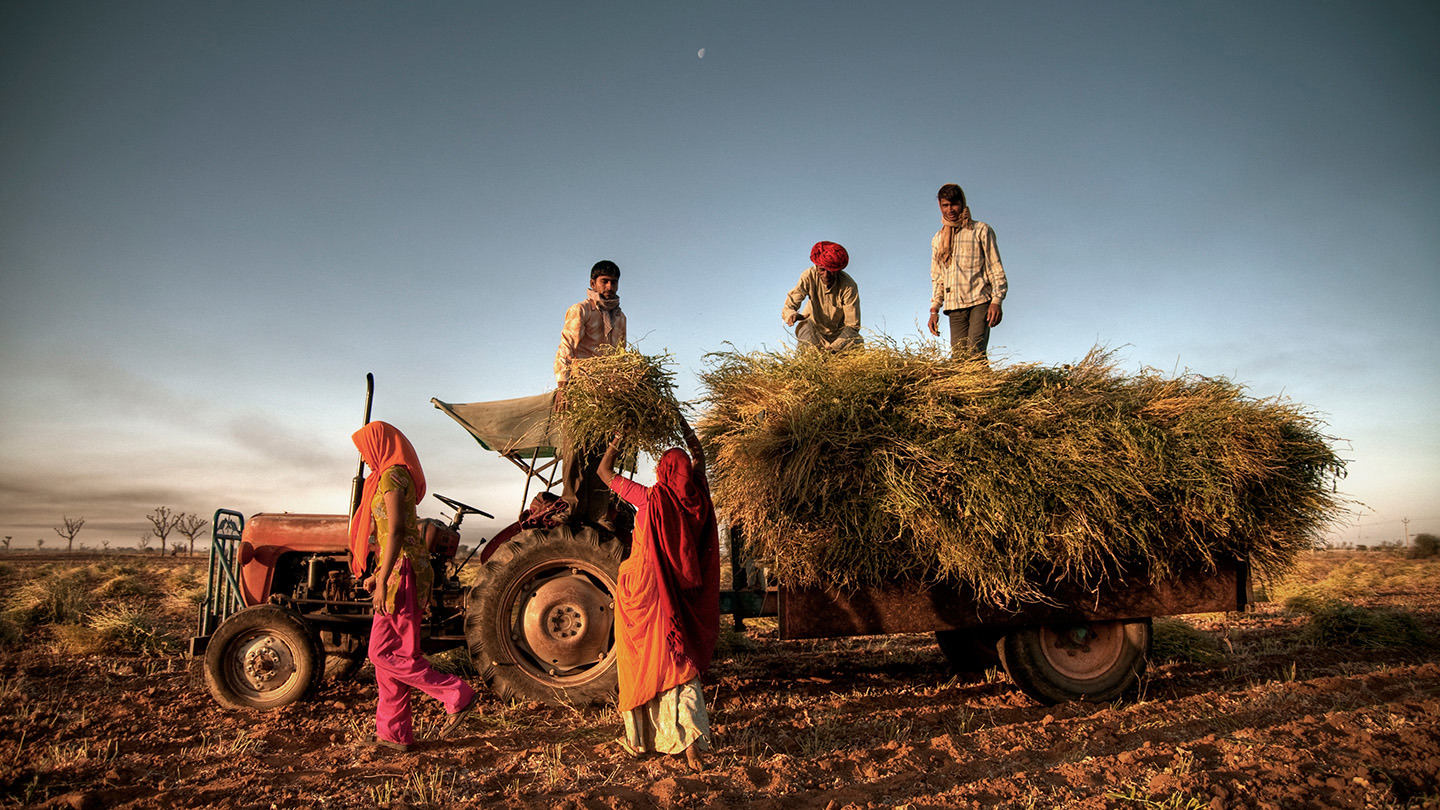
Rural India is not a single place. It is several hundred thousand distinct places, with different geographies, different crops, different castes, different distances from the nearest town with a decent school. The opportunity problem is as varied as the terrain.
 Opportunity
Opportunity in India
India is not a uniform opportunity landscape. It is a country of extraordinary concentration alongside extraordinary absence: where the same decade produces world-class engineers and districts with no functional schools. Understanding that distribution is the beginning of understanding what opportunity in India actually means.
 Opportunity
Opportunity Gaps: Where They Exist and Why
Opportunity gaps are not random and they are not primarily caused by individual failure. They cluster because systems create them predictably, and the interventions aimed at closing them keep failing because they address the symptom rather than the structure.