Remote Work and India
Remote work did not create India's talent export. It accelerated it, and changed the terms. The shift from outsourcing to remote employment is not just a pricing story. It is a structural change in how global talent flows.

Founder, Majhi Group & Majhi OS
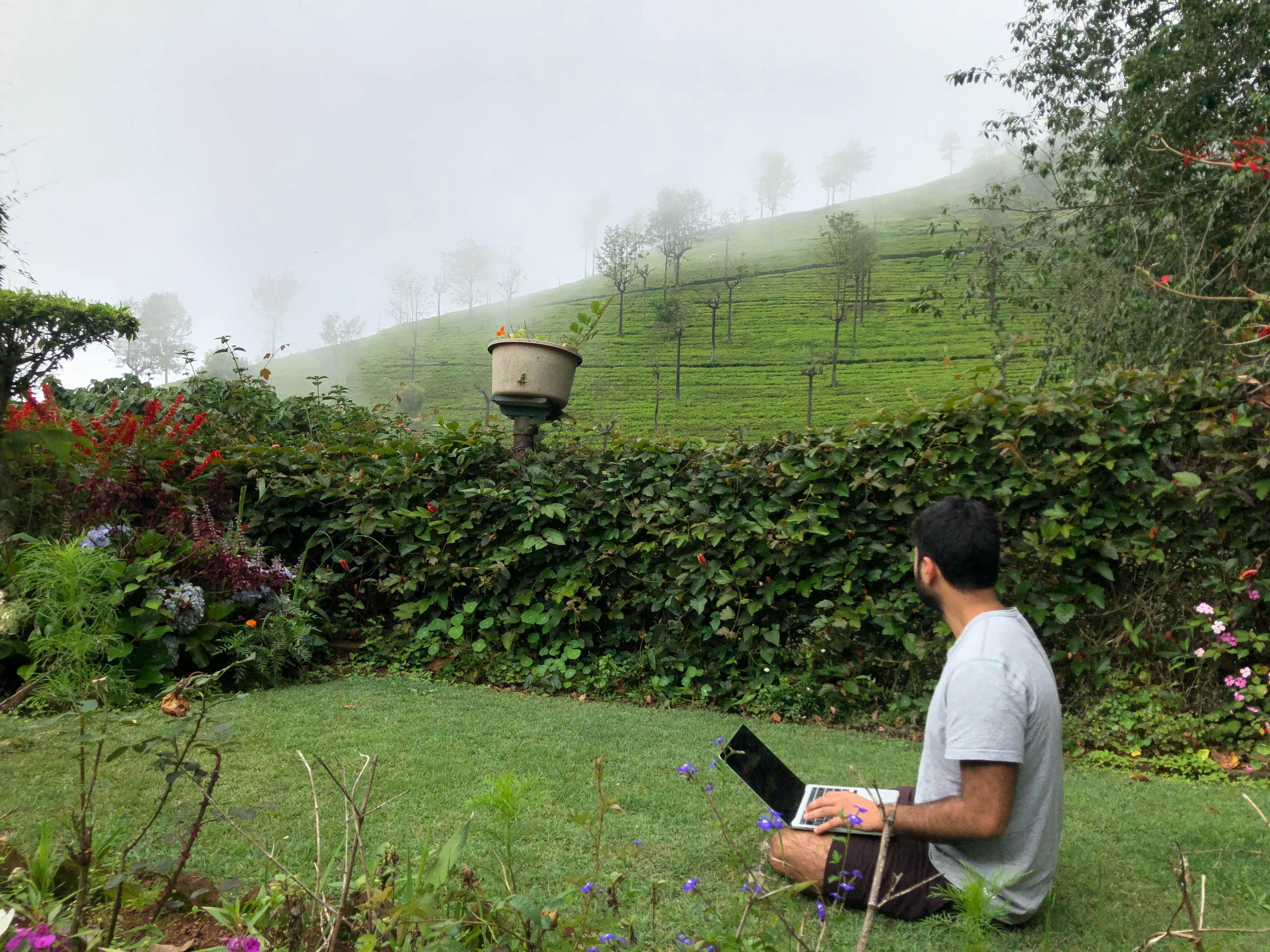
The first time I ran a search for a global company using only remote candidates in India, nobody called it remote work. It was 2019. The hiring manager was in London. Every shortlisted candidate was in India. The process worked exactly as it would have if everyone were in the same city, except it found better people, because geography was no longer the filter.
India has been exporting technology talent to global companies for 30 years. What changed after 2020 was not the supply, Indian engineers and professionals have been globally sought for decades. What changed was the model. The shift from outsourcing (Indian teams doing work for foreign clients through intermediary firms) to remote employment (Indian individuals employed directly by foreign companies) has structural consequences that are still working through the system.
The old model and its limitations
The outsourcing model that built India's IT services industry worked as follows: a large service firm (TCS, Infosys, Wipro) hired Indian engineers, deployed them on client projects, and captured a margin between what the client paid and what the engineer earned. The engineer had a stable employer, clear career progression within the Indian IT services hierarchy, and no direct relationship with the end client.
This model was efficient at scale and produced genuine value for both sides. But it had structural limitations. The Indian engineer was paid a fraction of what a directly employed equivalent would earn. Career advancement was constrained to the service firm's hierarchy. Exposure to the actual product and business decisions, the work that produces the judgment and experience required for senior leadership, was limited by the nature of client-vendor relationships.
The model also created a structural dependency: the engineer's market value was largely determined by the service firm's contracts, not by their individual capabilities. In a competitive market, a highly capable engineer and a mediocre one might earn similar salaries if they were both at the same pay band in the same firm.
What the remote employment model changes
When a company in San Francisco or London directly employs an Indian engineer as a remote team member, same tools, same meetings, same Slack channels, same equity, the structure changes in several ways.
The engineer is compensated closer to global market rates for their role, not at the margin that an outsourcing intermediary passes through. The gap between what the company pays and what the engineer receives narrows dramatically or disappears.
The engineer's exposure changes. They are in the room (virtually) for product decisions, strategy discussions, and the kind of work that was previously filtered through the outsourcing relationship. The development that this provides, understanding why decisions are made, not just how to implement them, compounds into career capital that is more portable and more valuable than equivalent time spent in an IT services role.
The career trajectory changes. An engineer with direct employment experience at a global technology company has a resume that opens different doors than an equivalent-skilled engineer whose experience is all at Indian IT services firms. They have references, demonstrated outputs, and product context that the services experience doesn't provide.
What it means for Indian talent
The remote employment model is, in aggregate, better for Indian professionals than the outsourcing model it is replacing or supplementing. The compensation is higher, the experience is richer, and the career optionality is greater.
It is also creating stratification in the Indian talent market that is more pronounced than what the outsourcing model produced. Engineers who can work effectively in remote-first global teams, who communicate clearly in written English, who can work autonomously, who can navigate the informal norms of US or European work culture from a distance, earn substantially more and have meaningfully better career trajectories than engineers who cannot. This is not purely a capability gap; it includes cultural fluency, communication habits, and working style differences that are learnable but not evenly distributed.
The cities most affected are not the traditional IT services strongholds, where the outsourcing model is well established, but the secondary cities and towns from which capable engineers were previously funnelled through IT services as the only available path. Remote employment creates a new path: work for a global company without relocating to Bangalore or Hyderabad. This is genuinely new and its consequences are still playing out.
What it means for global companies
For companies building remote teams in India, the shift to direct employment rather than outsourcing changes the hiring logic. You are competing for individuals in a market rather than contracting with a service firm. This requires capability in sourcing, evaluating, and managing individual talent that is different from managing a vendor relationship.
It also changes the risk profile. Directly employed team members who have access to your codebase, your product roadmap, and your customer data are not the same as outsourced workers behind a vendor SLA. The security, compliance, and intellectual property considerations are different and require explicit attention.
The companies that have done this well share some characteristics: they invest in onboarding that is calibrated for remote and cross-cultural dynamics, they make explicit what would be implicit in an office, they build management structures that don't require physical presence to work, and they compensate in ways that reflect market rates rather than the cost-arbitrage mindset of the outsourcing era.
The longer-term implication
Remote work is accelerating a structural shift in how talent flows globally. The prior model required physical relocation, the Indian engineer had to move to the US or UK to access global career opportunities. The current model allows talent to stay in India, earn globally competitive compensation, and build globally relevant careers without uprooting.
The prior model required physical relocation to access global career opportunities. The current model allows talent to stay in India, earn globally competitive compensation, and build globally relevant careers without uprooting.
The long-term effect of this is unclear. In the optimistic version, it means that talented people who would previously have left India now have strong reasons to stay, building wealth in India, reinvesting in Indian communities, founding companies with global experience but local presence. In the pessimistic version, the best talent is captured by global companies and Indian institutions remain starved of the experienced professionals they need to build at home.
The reality will be both. Some people will stay and build. Some will use remote employment as a platform toward eventual relocation. The net effect on Indian talent distribution is still being determined by choices that individuals are making right now, in a landscape that is genuinely different from what existed five years ago.
Engineers who can work effectively in remote-first global teams earn substantially more and have meaningfully better career trajectories than those who cannot. This is not purely a capability gap - it includes cultural fluency that is learnable but not evenly distributed across cities and colleges.
Manas Majhi grew up in Junagarh, Kalahandi, Odisha. He writes about opportunity, development, and the systems that fail to distribute either equitably. He is the founder of Majhi Group and Majhi OS.
See also: Global Talent: How Borders Are Dissolving, Tier 2 and Tier 3 Cities in India, Why Global Companies Should Hire From India
Sources
India IT industry export revenue and talent data: NASSCOM via Business Standard
India engineering talent supply: Business Standard
Why global companies hire from India: IBEF technology sector
Frequently Asked Questions
How has remote work changed the terms of India's talent export?
The shift from outsourcing (Indian teams doing work for foreign clients through intermediary firms) to remote employment (Indian individuals employed directly by foreign companies) changes three things structurally: compensation moves closer to global market rates rather than the margin an outsourcing intermediary passes through; exposure changes because the engineer is in the room for product decisions and strategy discussions rather than filtered through a client-vendor relationship; and career trajectory changes because direct employment at a global technology company produces references, demonstrated outputs, and product context that IT services experience doesn't provide.
What is the salary differential for remote workers in India versus Western equivalents?
For most roles in technology, the all-in cost for an Indian remote employee is 30-60% lower than an equivalent Western hire, depending on seniority and location within India. This differential is real and matters for hiring economics. It should not be framed as the primary argument, it is narrowing as Indian talent becomes more globally recognized, but it enables companies to hire at higher quality levels than the same budget would support in the US or Europe, when used correctly.
What does the rise of remote employment mean for India's talent distribution long-term?
The optimistic scenario: talented people who would previously have emigrated now have strong reasons to stay in India, building wealth locally, reinvesting in Indian communities, and eventually founding companies with global experience and local presence. The realistic scenario: some people will stay and build; others will use remote employment as a platform toward eventual physical relocation. What is clearly new is that the constraint is no longer geographic, capability, not location, is the determining factor in whether an Indian professional can access global career opportunities.
Did this land? Push back? Add something I missed?
Reply to Manas →Continue Reading
Related writing
 Future of Work
Global Talent, How Borders Are Dissolving
The geography of talent has dissolved faster than the geography of hiring processes. Most companies still filter candidates by zip code while the best people for the role are somewhere they've never sourced from.
 India
IndiaWhy Global Companies Should Hire From India
India produces more engineering graduates per year than the US has engineers in total. That is not a staffing opportunity. It is a structural shift in where capability lives.
 India
IndiaTier 2 and Tier 3 Cities in India
The next chapter of India's growth will be written in cities most outsiders have never heard of. Indore, Surat, Coimbatore, Vadodara, Vizag, Jaipur, these are not minor cities. They are places with real economies, real talent, and an underappreciated capacity to absorb the next wave of investment that the saturated metros cannot.