Why I Keep Talking About Odisha
People sometimes ask why I spend so much time talking about a state most of the world cannot find on a map. The answer is about identity and responsibility.
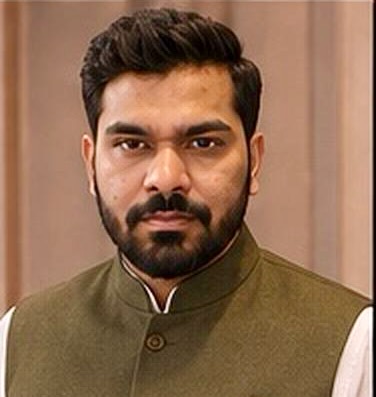
Founder, Majhi Group & Majhi OS

A contact in London, after I had mentioned Odisha in the third conversation in a row, asked me: "Why do you keep talking about it? You've been away for years. Most people just move on."
It was a reasonable question. The honest answer took me some time to work out.
The representation problem
When I first started working internationally, I encountered a specific gap: the map of India in most people's mental geography was extremely incomplete. They knew Mumbai, Delhi, Bangalore. They knew Goa for tourism, perhaps Kerala for backwaters and Ayurveda. They had heard of the IT sector, the Bollywood industry, the tech startup scene.
They knew almost nothing about the 700 million people living in the states that do not feature in this map. Odisha, Jharkhand, Chhattisgarh, the northeastern states, rural Uttar Pradesh and Bihar, the majority of India's population lives in places that the mainstream representation of India almost entirely excludes. The case for why Odisha specifically matters is the subject of a separate essay.
This exclusion has consequences. It shapes where capital and attention go. It shapes which markets get served and which are treated as non-existent. It shapes how Indians from these places relate to narratives of national success and development, whether they see themselves in the story or understand that the story is about someone else.
I keep talking about Odisha partly because someone needs to. The state has extraordinary culture, complex history, real development challenges, and real development momentum, none of which is adequately represented in the conversations where representation would matter.
The accountability problem
The second reason is harder to articulate and more personal.
I left Odisha at 18. I built a career that took me away from the conditions that shaped me. I have benefited from opportunities that most people who grew up in similar circumstances did not have access to. And the people who gave me those opportunities, my family, my teachers, the institutional investments that made my education possible, cannot all be repaid individually. They can only be repaid systemically, by doing something with the opportunity that contributes in some way to the conditions that produced it.
This is not guilt. It is closer to a sense of obligation that I think is rational rather than sentimental. The people who enabled me cannot be repaid individually. What can be repaid is attention, advocacy, and whatever concrete contribution becomes possible.
Talking about Odisha, accurately, seriously, to audiences that would not otherwise encounter it, is one form that contribution takes. Writing about it is another. Actively looking for ways to connect talent and capital and opportunity to the place is another.
None of this solves the development challenges that the state faces. But the sum of people who left places like Odisha and do nothing with that connection is a real loss, a resource that could be available for the work of development and is not because nobody maintained the connection.
What it produces
The practical output of keeping the connection has surprised me.
Conversations that started with "oh, where is that?" have produced mentorships, investments, business relationships, and introductions that would not have existed if I had answered the "where are you from?" question with Bangalore. The specificity turns out to be an asset, not a liability.
Being clearly and unapologetically from somewhere particular, rather than positioning oneself as a generic global professional, is, I have found, more interesting to the people worth being interesting to. It produces more honest conversations, more genuine relationships, and a clearer sense of what you are actually about.
I talk about Odisha because I am from there and it made me what I am. That is not a complicated answer. It just took me a while to stop being ambivalent about saying it.
The sum of people who left places like Odisha and do nothing with that connection is a real loss - a resource that could be available for the work of development and is not, because nobody maintained the connection.
See also: A Love Letter to Odisha, The Odyssey of Odisha, Beyond GDP: What a Developed Odisha Must Be Answerable For
Sources
McKinsey Global Institute: India's Turning Point: An Economic Agenda for the Decade
Observer Research Foundation: Odisha's Development Trajectory
Frequently Asked Questions
What is the representation problem with how India is understood internationally, and why does it matter?
Most international mental maps of India are concentrated in a handful of cities and industries: Mumbai, Delhi, Bangalore. The IT sector, Bollywood, the startup scene. This leaves roughly 700 million people living in states that almost never appear in mainstream India representation, Odisha, Jharkhand, Chhattisgarh, the northeast, rural UP and Bihar. The exclusion has real consequences: it shapes where capital and attention go, which markets get served, and how Indians from these places relate to narratives of national success, whether they see themselves in the story or understand it's about someone else. Accurate, serious representation of Odisha in conversations where it would otherwise be absent is not sentiment. It is a small correction to a large information gap.
What is the accountability argument for people who left places like Odisha?
The people who enabled the leaving, family, teachers, institutional investments that made education possible, cannot all be repaid individually. They can only be repaid systemically: by doing something with the opportunity that contributes to the conditions that produced it. This is not guilt. It is closer to a rational sense of obligation: the sum of people who left places like Odisha and do nothing with that connection is a real loss, a resource that could be available for the work of development is not, because nobody maintained the connection. Talking about Odisha accurately and seriously to audiences that would not otherwise encounter it, writing about it, actively looking for ways to connect talent and capital and opportunity to the place, these are forms that contribution takes. None of it solves the development challenges. But aggregate diaspora attention is a real input into the conditions that either improve or don't.
What does keeping the Odisha connection actually produce practically for someone building at a global level?
More than the strategic positioning arguments suggest. Being clearly and unapologetically from somewhere particular, from Kalahandi, from an Odia-medium school, from a 32-hour train to Delhi at eighteen, produces more honest conversations, more genuine relationships, and a clearer sense of what you are actually about than presenting as a generic global professional. The specificity turns out to be an asset, not a liability. Conversations that started with 'where is that?' have produced mentorships, investments, business relationships, and introductions that would not have existed under a different self-presentation. The people worth being interesting to are often more interested in someone who is clearly from somewhere and clear about what that produced than in someone who has polished away the origin. The connection has compound value, not sentimental, but practical.
Did this land? Push back? Add something I missed?
Reply to Manas →Continue Reading
Related writing
 Odisha
The Odyssey of Odisha
If you grew up in Odisha, you know someone who left. Maybe it was you. What it means to love a place that made you leave, and whether that is beginning to change.
 Odisha
A Love Letter to Odisha
The state I grew up in shaped how I think about ambition, possibility, and the gap between potential and outcome.
 Odisha
The Waiting Generation
Every postponed examination delays more than a recruitment process. It delays independence, dignity, and the lives of an entire generation. Governments often think they are managing examinations. In reality, they are managing time.