Building for a Billion People
Scale at this magnitude is not just a bigger version of building for fewer people. It changes the problem entirely.

Founder, Majhi Group & Majhi OS

There is a number that changes how you think about everything once you sit with it long enough. One billion people. Not as an abstraction, as an actual operating constraint on every decision you make.
I have spent enough time building things in India to know that scale here is not simply more of something. It is a different category of problem. The distance between designing a product for a thousand users and designing one for a billion is not three orders of magnitude, it is a complete reconception of what design means.
What scale actually changes
When you build for a billion people, the tails become the main event.
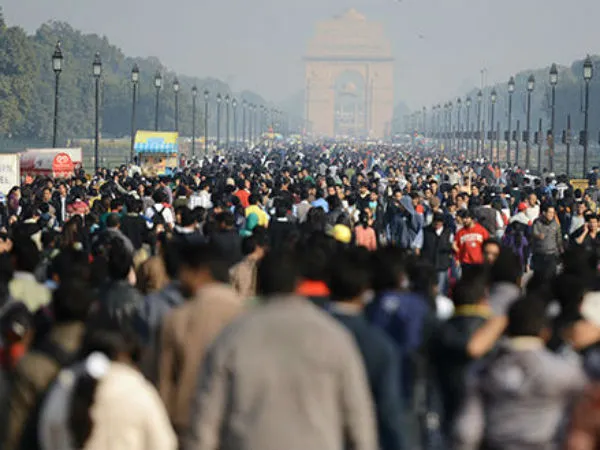
In a small user population, the unusual cases, the person with the old phone, the slow connection, the non-standard use case, are edge cases. You can document them, acknowledge them, and proceed. At scale, your edge cases contain more people than most countries have as their total population.
This changes what quality means. A 99% reliability rate sounds excellent until you realize that at a billion users, 1% means ten million people experiencing failure simultaneously. The definition of "good enough" has to shift dramatically because the absolute size of your failure is always enormous.
It also changes what diversity means. A billion Indians are not a monolithic group. They speak hundreds of languages across dozens of dialect families. They live in conditions ranging from high-rise Mumbai apartments to villages with four hours of electricity per day. Their relationship with smartphones ranges from digital native to first-time user. Any product that treats this population as uniform will fail significant portions of it, and failure at this scale is not a rounding error, it is an indictment.
The infrastructure prerequisite
Most things that work for a billion people in India work because of infrastructure decisions made years or decades earlier, often by people who never anticipated this specific application.
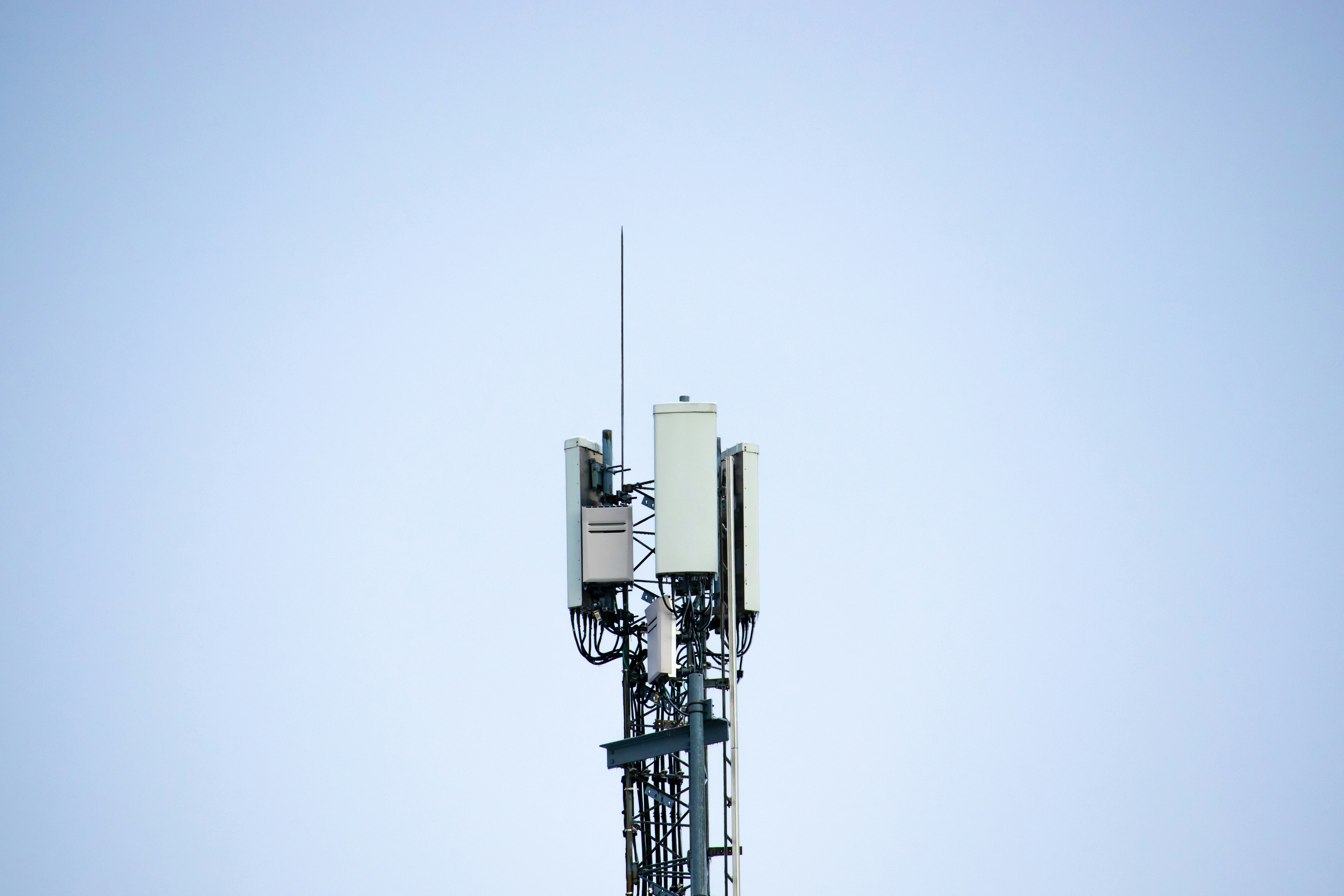
The mobile network buildout of the 2000s made smartphone access possible at mass scale. The 2016 Jio disruption that drove data costs to near-zero made digital services accessible to people who had never before thought of data as something they could afford to use freely. Aadhaar created a population-scale identity infrastructure that enabled a generation of fintech and public services built on verified identity. UPI built payment infrastructure that processed 172 billion transactions in 2024, volumes that most global payment systems cannot match and that were built on open, interoperable rails owned by no single company.
None of these were built by startups moving fast and breaking things. They were patient infrastructure investments, often with long incubation periods before the downstream applications became possible. The lesson is that building for a billion requires thinking in infrastructure layers, and accepting that your infrastructure investment might not produce visible returns for years.
What it teaches you
Building for this scale teaches a specific kind of humility that is hard to acquire otherwise.
You learn that your assumptions about users, what they know, what they have, what they want, are almost always wrong in ways that your environment has hidden from you. The team building the product typically lives in conditions that are not representative of the conditions of the people using it. The gap is enormous and largely invisible unless you work actively to close it.
You learn that constraints produce innovation in specific, non-obvious ways. The bandwidth constraints that affected Indian mobile development produced a generation of engineers who understand data efficiency at a level that engineers building for broadband contexts rarely need to develop. Those engineers then applied those instincts to contexts where they produced disproportionate value.
And you learn that scale itself is a form of credibility. When something works for a billion people, genuinely works, across the diversity and complexity of that population, it demonstrates a kind of robustness that no other test can replicate. India is the hardest environment in the world to build for at scale. The things that survive it have usually earned their survival.
What comes next
The next generation of things built for a billion Indians will run on infrastructure that is now in place but not yet fully utilized: cheap data, near-universal smartphone access, population-scale identity verification, real-time payment rails.
What gets built on that infrastructure over the next decade will be among the most interesting and consequential technology development happening anywhere in the world. Not because India is exotic or exceptional, but because the combination of scale, diversity, constraint, and ambition produces problems worth solving and solutions that matter.
India's DPI produced payment infrastructure that processed 172 billion transactions in 2024 - built on open rails owned by no single company. That is a design philosophy, not a market outcome. The infrastructure for what comes next is already in place.
If you can build something that works for a billion Indians - across their languages, their connectivity gaps, their edge cases - you can build it anywhere.
See also: AI Adoption in Rural India, How 4G Changed India, Digital Public Infrastructure
Sources
UPI Transactions 2024 growth data: DD News
AICTE: All India Council for Technical Education, Engineering Graduate Data
Frequently Asked Questions
What makes building for India's scale fundamentally different from building for smaller markets?
At billion-person scale, the tails become the main event. A 99% reliability rate sounds excellent until you realize that 1% failure means ten million people experiencing it simultaneously. India also has more than 800 million internet users, hundreds of languages, and conditions ranging from 5G connectivity in Mumbai to intermittent 3G in rural districts. Any product that treats this population as uniform will fail significant portions of it, and failure at this scale is not a rounding error, it is an indictment of the design assumptions.
What is India's digital infrastructure base, and why does it matter?
India has built digital infrastructure that is genuinely novel in its scale and design. UPI processed 172 billion transactions in 2024, growing 46% year-on-year. Aadhaar provides biometric digital identity to over 1.3 billion people. The Open Network for Digital Commerce, Account Aggregator framework, and ONDC are all built as open protocols rather than proprietary platforms, enabling a generation of applications that would not have been possible with proprietary infrastructure.
Why does building at India's scale produce more robust solutions?
Scale creates selection pressure that eliminates solutions that only work under favorable conditions. The bandwidth constraints that affected Indian mobile development produced a generation of engineers with deep expertise in data efficiency and performance optimization. Solutions that survive India's diversity, linguistic, infrastructural, economic, have typically been simplified and stress-tested in ways that generous conditions do not require. This is one reason Indian engineers have been disproportionately successful in global technology markets.
Did this land? Push back? Add something I missed?
Reply to Manas →Continue Reading
Related writing
 India
IndiaWhy India's Scale Matters
When a country of 1.4 billion people solves a problem, the solution tends to be unusually robust. And unusually relevant.
 India
IndiaAI Adoption in Rural India
India's AI story is being written in Bengaluru and Mumbai. The more important story, the one that determines whether AI expands or concentrates opportunity in India, is being written in the districts that the first wave of technology only partially reached.
 India
IndiaHow 4G Changed India
The 2016 data disruption did not just make the internet cheaper. It rewired what India could become.