Why India's Scale Matters
When a country of 1.4 billion people solves a problem, the solution tends to be unusually robust. And unusually relevant.

Founder, Majhi Group & Majhi OS
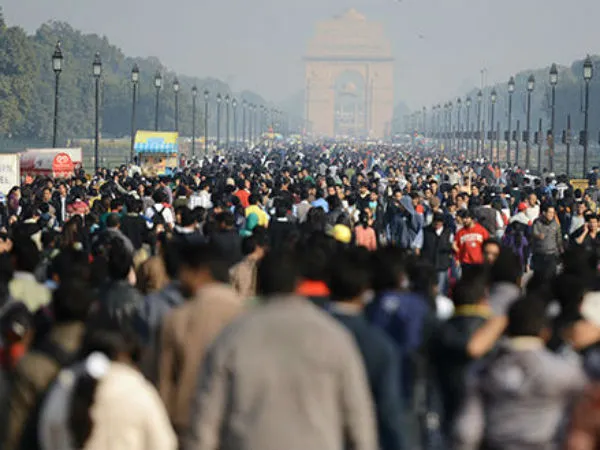
When I explain to global clients why I build from India, the conversation almost always comes back to scale, not as a talking point, but as a practical constraint that forces a different quality of thinking. Building a hiring system that works in Kalahandi is a different problem than building one that works in Bangalore. Both are India. The distance between them, in terms of infrastructure, language, digital access, and expectations, is enormous.
Scale forces you to think differently. That is what I find most interesting about building here.
Scale changes what is possible, what is necessary, and what gets built.
India's population of 1.4 billion people, with over 800 million internet users and 1.5 million engineering graduates produced annually, is a fact that gets cited frequently and absorbed rarely. The operating implications are explored in building for a billion people. The citing is usually in service of an investment thesis, large market, growing middle class, demographic dividend. These are legitimate points. But they miss the more interesting implication, which is about what building at this scale does to the things being built.
Solutions that survive India
When something works in India, genuinely works, across the country's geographic, linguistic, economic, and infrastructural diversity, it is typically a more robust solution than what gets built in contexts with less variation.
The reason is selection pressure. Building for an Indian population means building for users who speak one of hundreds of languages, who use devices across a very wide range of capabilities, who access services through connections varying from 5G in Mumbai to intermittent 3G in rural Rajasthan, who have very different levels of prior experience with digital services, and who have very different economic relationships with the cost of using them.
This selection pressure eliminates solutions that only work under favorable conditions. What survives it has typically been simplified, compressed, and stress-tested in ways that generous conditions do not require. The engineers who built apps for India's constrained mobile context, low memory, low bandwidth, price-sensitive users, developed instincts about performance and data efficiency that are genuinely superior to what you develop building for high-bandwidth, high-memory contexts.
This is one reason why Indian engineers have been disproportionately successful in global technology markets: the problems India required them to solve produced skills with broad applicability.
The global relevance question
There is a long-standing debate about whether solutions developed for India can be exported to other developing country contexts, or whether India is too specific, too particular in its combination of culture, regulation, language, and infrastructure, to serve as a model.
The answer is: both, depending on what you are exporting.
The specific product is often not exportable. What works for an Indian UPI transaction does not work straightforwardly in a country with different banking infrastructure, regulatory environment, and consumer behavior. The cultural and institutional assumptions embedded in Indian products are real, and they limit direct portability.
What is exportable is the approach: what happens when you take the design philosophy that produced India's solutions, emphasis on low-cost access, interoperable infrastructure, offline functionality, the public goods model for essential infrastructure, and apply it to another context. The approach is highly portable. The specific instantiation is much less so.
The Global South is full of problems that resemble India's problems at different scales. The digital payment infrastructure problem that India solved with UPI has analogs in countries across Africa, Southeast Asia, and Latin America. The digital identity problem has direct equivalents. The affordable healthcare access problem. The last-mile logistics problem. India has generated more experience with these problems at meaningful scale than almost anywhere, and that experience, even when the specific solution does not transfer, has genuine value.
What this means for the next decade
India's next decade is likely to produce a generation of solutions to problems that are globally relevant. AI in Indian languages for Indian contexts. Healthcare delivery for low-resource settings. Education technology for first-generation learners. Infrastructure solutions for dense, resource-constrained urban environments.
These solutions will be built by people who are living with the problems, not by outsiders designing for a market they have studied but never inhabited. That kind of embedded knowledge produces a different quality of solution, and it tends to produce solutions that are more durable because they are built on more accurate assumptions.
The countries and companies that pay attention to what is being built in India, not just the visible unicorn layer, but the deeper layers of infrastructure and approach, will have access to a playbook for solving some of the most important problems of the next generation of global development.
India's DPI has already demonstrated this: UPI's architecture has been studied by Brazil (whose Pix payment system borrowed from similar open-rail principles) and explored by markets across Africa and Southeast Asia. The solution to India's financial inclusion problem turned out to have global applicability, because the design was stress-tested at the hardest scale.
The countries and companies that pay attention to what is being built in India - not just the unicorn layer, but the deeper infrastructure layer - will have access to a playbook for solving some of the most important global development problems of the next generation.
When something works in India - genuinely works, across the country's geographic, linguistic, economic, and infrastructural diversity - it is typically a more robust solution than what gets built in contexts with less variation. Scale forces you to think differently.
See also: Building for a Billion People, How 4G Changed India, Digital Public Infrastructure
Sources
World Bank India: population and economic data
Frequently Asked Questions
Why does building for India's scale produce more robust solutions?
Scale creates selection pressure. Building for 1.4 billion people means designing for hundreds of languages, devices ranging from flagship to entry-level, connectivity from 5G to intermittent 3G, and economic conditions from affluent metropolitan consumers to first-time smartphone users. Solutions that survive this diversity have been simplified and stress-tested in ways that generous conditions do not require. The engineers who built apps for India's constrained mobile context, low memory, low bandwidth, price-sensitive users, developed instincts about performance and data efficiency that are genuinely superior to what you develop building for broadband-saturated markets.
How does India's experience with scale transfer to global markets?
What is portable from India is not the specific product, what works for a UPI transaction does not transfer straightforwardly to a country with different banking infrastructure. What is portable is the approach: emphasis on low-cost access, interoperable infrastructure, offline functionality, and the public goods model for essential services. The Global South is full of problems that resemble India's problems at different scales, digital payment infrastructure, digital identity, affordable healthcare access, last-mile logistics. India has more experience with these at meaningful scale than almost anywhere else.
What does India's scale mean for the next generation of technology?
India's next decade will produce solutions to problems that are globally relevant: AI in Indian languages for Indian contexts, healthcare delivery for low-resource settings, education technology for first-generation learners, infrastructure solutions for dense urban environments. These solutions will be built by people living with the problems, not outsiders designing for a market they have studied but never inhabited. That kind of embedded knowledge produces solutions that are more accurate to actual conditions and more durable because of it.
Did this land? Push back? Add something I missed?
Reply to Manas →Continue Reading
Related writing
 India
IndiaBuilding for a Billion People
Scale at this magnitude is not just a bigger version of building for fewer people. It changes the problem entirely.
 India
IndiaAI Adoption in Rural India
India's AI story is being written in Bengaluru and Mumbai. The more important story, the one that determines whether AI expands or concentrates opportunity in India, is being written in the districts that the first wave of technology only partially reached.
 India
IndiaHow 4G Changed India
The 2016 data disruption did not just make the internet cheaper. It rewired what India could become.