Building from Kalahandi
Kalahandi was once synonymous with famine and underdevelopment. Growing up in Junagarh, at its center, taught me what potential looks like before it is realized.

Founder, Majhi Group & Majhi OS
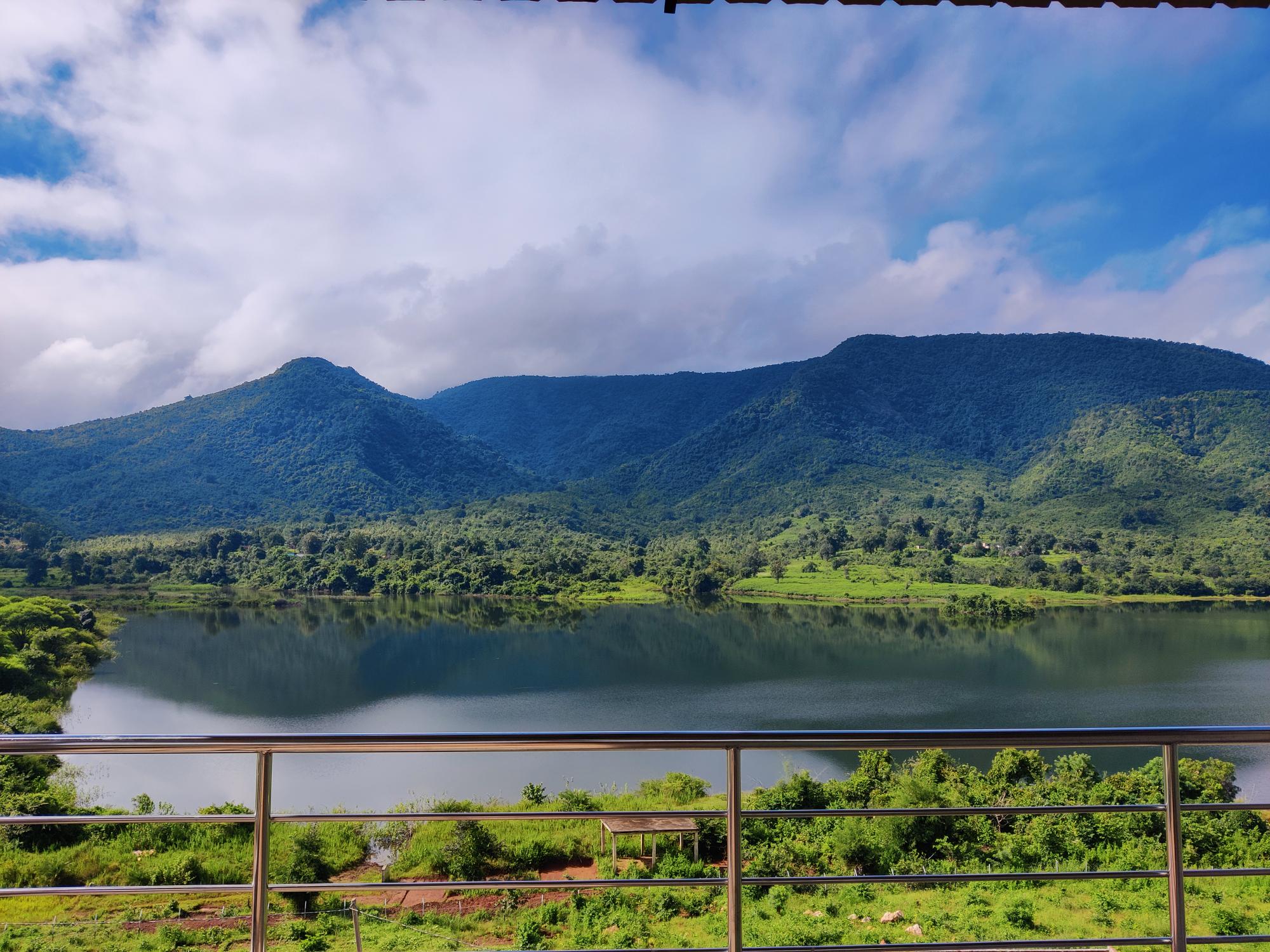
Majhi Group did not start with an office, a local client base, or a network of investors I could walk across town to meet. It started in Junagarh, Kalahandi, a district with none of those things within reach. Everything about how the business is built, remote by default, global by necessity, sourcing talent outside the pipelines everyone else fishes from, traces back to that starting condition.
This is not the essay about Kalahandi's famine narrative or what the district actually looks like beneath the headlines. That version exists and I stand by it. This is a narrower question: what does building an actual company, from a place with none of the standard infrastructure for building one, actually require?
The business had to be placeless
Executive search, as an industry, has historically been a local game. Firms build reputations in specific cities, work specific corporate ecosystems, place candidates through relationships built over years of proximity. That model was never available to me. Junagarh has no corporate ecosystem to be proximate to.
So Majhi Group was built the only way it could be: entirely remote, sourcing and placing candidates across geographies, with no single market as its home base. This was not a calculated bet on the future of distributed work. It was the only shape the business could take, given where it started.
What turned out to be true, a few years in, is that the world moved toward this model anyway. Remote hiring, distributed executive search, global candidate pools, these became normal for the industry roughly the same time they stopped being a constraint unique to founders like me. The firms that had to retrofit themselves for distributed work spent years unlearning local habits. Majhi Group never had those habits to unlearn.
The business wasn't built remote as a strategy. It was built remote because the alternative required infrastructure that didn't exist where I was standing.
Where I learned to look for talent
Growing up in Junagarh, I watched capable people go unrecognized constantly, not because they lacked skill, but because there was no system positioned to notice them. The credentialing infrastructure, the recruiter networks, the alumni pipelines that connect talent to opportunity in dense urban markets, none of it reached a district like Kalahandi. Capability existed. The infrastructure to convert it into visible opportunity did not.
That observation became a direct input into how Majhi Group sources candidates. Most executive search runs on warm networks and credentialed pipelines, the same universities, the same prior employers, the same visible signals repeating across candidate pools. It is efficient, and it systematically misses the people who are competent but were never inside the pipeline to begin with.
Sourcing outside those pipelines is slower. It requires evaluating capability directly rather than reading it off a resume's pedigree. But it also means finding candidates that competitor firms, running the same searches through the same networks, never surface. The discipline of looking past the credential for the capability underneath it is not something I learned in executive search training. I learned it watching who got overlooked in Junagarh.
Building without inherited infrastructure
Every resource a business in a major hub takes for granted, warm investor introductions, a peer network of other founders, a local talent pool to hire the first employees from, had to be built from nothing, starting from Kalahandi. There was no local version of any of it to draw on.
What that forces, practically, is a specific kind of discipline. Every client relationship starts cold. Every hire is sourced through direct outreach rather than a referral network that already exists. Every piece of credibility has to be earned through delivered work, because there is no local reputation to borrow against.
This is slower in the early stages than building from a hub would be. It also means the business that results does not depend on any single market, relationship, or geography to function, because it was never allowed to depend on one in the first place.
Every resource had to be earned, not inherited. That constraint, uncomfortable at the time, is the reason the business doesn't depend on any single geography to survive.
What actually got built
Majhi Group now operates globally, placing C-suite and VP-level candidates across markets, with a structure that was never rebuilt for distributed work because it was never built any other way. Majhi OS, the hiring infrastructure company built alongside it, extends the same premise: that the constraint of not being anywhere in particular can become an advantage, if the business is designed around it from the start rather than retrofitted later.
None of this required Kalahandi to change first. It required treating the absence of local infrastructure as a design constraint rather than a disqualifying condition. The place did not hand me the business. It handed me the specific shape the business had to take, and that shape turned out to travel well.
Manas Majhi grew up in Junagarh, Kalahandi, Odisha. He writes about opportunity, development, and the systems that fail to distribute either equitably. He is the founder of Majhi Group and Majhi OS.
See also: The Kalahandi Most People Never See, Kalahandi and the Opportunity Gap, Why It Costs Rs.3,000 to Fly to Kalahandi
Sources
McKinsey Global Institute: The Future of Work After COVID-19
Frequently Asked Questions
Can you build a business from Kalahandi?
Yes, but the starting conditions require a specific approach. Kalahandi lacks the dense networks, investor ecosystems, and talent pools of Bangalore or Hyderabad, which means early-stage business building must rely more heavily on remote operations, outside-in connections, and persistent outreach to networks that don't naturally include places like Kalahandi. Manas Majhi built Majhi Group (a global retained executive search firm) and Majhi OS (autonomous hiring operations infrastructure) starting from a background in Kalahandi. The constraint forced a specific discipline: every resource had to be earned, not inherited.
Why did a search firm founded from Kalahandi end up entirely remote and global?
Because the alternative was never available. A place-bound business, one that depends on being physically present in a financial or corporate hub, was never an option starting from Junagarh. Building remotely wasn't a strategic bet on the future of work; it was the only version of the business that could exist at all. That constraint turned out to be an advantage once remote hiring became normal everywhere: Majhi Group was never retrofitted for distributed work. It was built for it from day one.
What is Manas Majhi's connection to Kalahandi?
Manas Majhi grew up in Junagarh, Kalahandi, Odisha. He is the founder of Majhi Group, a retained executive search firm that has completed 25+ C-suite and VP placements globally, and Majhi OS, an autonomous hiring operations infrastructure company. He is a recipient of the Indian Achievers' Forum Entrepreneur of the Year award and was named in the World Staffing Summit Top 100 Staffing Leaders. His writing on Kalahandi draws on direct experience of growing up in a resource-constrained environment and building from it.
Did this land? Push back? Add something I missed?
Reply to Manas →Continue Reading
Related writing
 Kalahandi
Entrepreneurship in Kalahandi
The structural case for building in Kalahandi, and what has to change for that case to become obvious to people who haven't looked.
 Kalahandi
The Day Western Odisha Agreed to Wait for Each Other
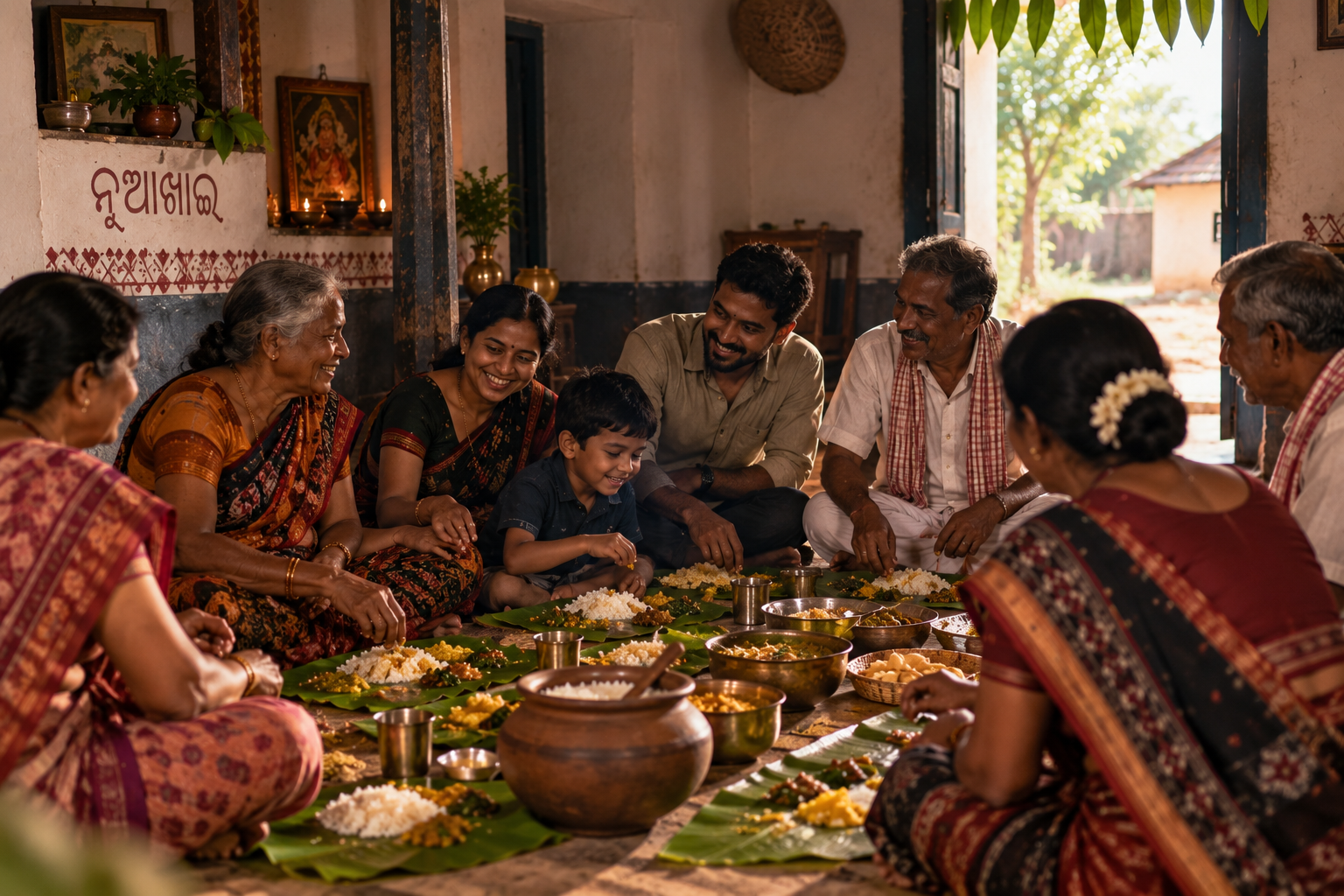
I've missed Nuakhai more than once for work, for study, for the life I was building away from home. Perhaps that's why I now see the festival differently: the most important thing on the table was never just the rice. It was the people who made the effort to be there.
 Kalahandi
Kalahandi Agriculture: The Water Paradox
Kalahandi has rivers. It has rainfall. It has fertile soil. It has everything a farming region needs, except the infrastructure to turn rainfall into reliable harvests. That gap between what the land has and what the land produces is one of the most fixable problems in Indian agriculture. And one of the least fixed.