Kalahandi's History Is Not What You Think It Is
For most people, Kalahandi's history begins and ends with the 1985 famine. That is like knowing Britain only through the Blitz. A place is not its worst decade. Kalahandi is ancient, complex, and has been building itself, quietly, for a very long time.

Founder, Majhi Group & Majhi OS
When people outside Odisha think about Kalahandi, they think about the 1985 famine. The images of malnourished children, the reports of families selling their children to survive, the political crisis that followed, those images traveled far and stayed long. They became, for most of India, what Kalahandi is.
I understand why a famine generates more coverage than centuries of history. Crisis travels faster than context. Drama is easier to transmit than complexity. A photograph of suffering is more immediate than an explanation of the structural conditions that produced it.
But a place is not its worst decade. And the story of Kalahandi that begins in 1985 and ends with the implication of permanent tragedy is not a history. It is a caption without a photograph.
The long view
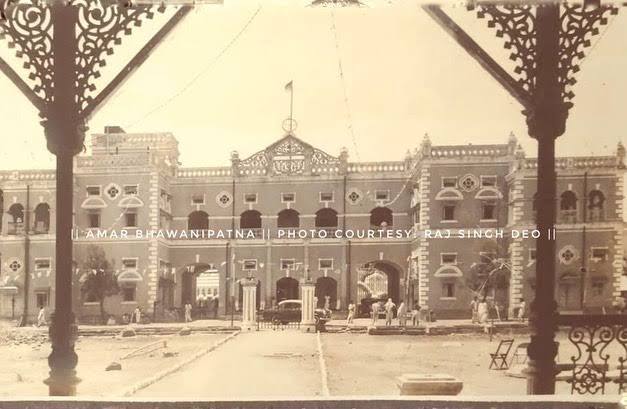
Kalahandi has been inhabited and organized as a polity for centuries. The Kalahandi kingdom, a princely state within the complex political geography of central India, had its own royal lineage, its own administrative traditions, its own cultural life. The district headquarters, Bhawanipatna, bears the name of the goddess Bhawani, an indication of the religious and cultural identity of the ruling class.
The forested hills and river valleys of Kalahandi were, long before any colonial mapping, home to tribal communities whose presence and territorial knowledge preceded the kingdom itself. The Kondh people, who inhabit the hills and forests of Kalahandi and neighboring districts, have a continuous history in this landscape that stretches back further than any written record. The Gond and Bhunjia communities similarly represent a relationship with this land that is measured in generations, not decades.
When the British arrived and began systematically documenting the princely states of central India in the 19th century, they found a Kalahandi that was neither empty nor passive. The Kondh resistance to British interference in their practices, the Meriah campaigns, through which the British attempted to suppress ritual practices among the hill tribes, produced a substantial period of tension and negotiation between colonial authority and the communities of these hills. The British records from this period are extensive precisely because the resistance was real and the landscape was difficult to control.
This is not peripheral history. The relationship between the Indian state and the communities of Kalahandi's interior, a relationship still visible today in debates over forest rights, mining rights, and the status of scheduled tribe communities under Indian law, has its roots in the colonial encounter. Understanding what Kalahandi is requires understanding that encounter.
The princely state and its integration
By the early 20th century, Kalahandi was one of the Orissa States, a cluster of princely states in what is now western and southern Odisha that maintained formal treaty relationships with British India while retaining their own internal governance structures.
The Maharaja of Kalahandi's court at Bhawanipatna was a centre of regional administration and culture. The palace, which still stands, now repurposed, is one of the more substantial architectural remnants of this period. Junagarh, where I grew up, has its own structures from this era: a texture of old India that you can still walk through, if you know what you're looking at.
After independence, the integration of princely states into the Indian Union was one of Sardar Vallabhbhai Patel's most significant administrative achievements. Kalahandi merged with Orissa in 1948, part of the broader consolidation that brought hundreds of princely states into the constitutional framework. The merger was not without complexity, there were negotiations over terms, concerns about administrative capacity, and the practical question of how centuries-old local governance systems would translate into democratic district administration.
Fifty years after independence, those questions had not been fully answered. The structures of administration that were supposed to connect Bhawanipatna to Bhubaneswar, and Junagarh to Bhawanipatna, were present on paper before they were present in practice. Roads existed on maps before they were passable in the rainy season. Hospitals existed in census data before they had trained doctors. Schools existed in government records before they had textbooks.
This gap between what existed on paper and what existed in practice is the structural origin of the crisis that became visible in 1985.
The famine, clearly
The 1985-87 period in Kalahandi involved real suffering. Monsoon failure, poor harvest, collapsing rural incomes, and an inadequate relief infrastructure combined to produce acute distress across large parts of the district and neighboring areas. Reports of families migrating in large numbers, children suffering malnutrition, and, most shockingly, allegations of distress-driven child transactions became national news.
There are things I want to say clearly about this.
First: the crisis was real. The suffering was real. Anyone who minimizes what happened to the people of Kalahandi in those years is wrong.
Second: the framing that Kalahandi is uniquely prone to disaster because of something inherent to the place or its people is also wrong. Monsoon failure hits places with irrigation differently than it hits places without. Market connectivity determines whether crop failure becomes hunger or merely inconvenience. Government relief capacity determines whether acute distress is temporary or fatal. Kalahandi in 1985 was exposed on all three fronts. The crisis was structural and institutional, not geographical.
Third: the reporting that followed the 1985-87 crisis created a national image of Kalahandi that has been extraordinarily difficult to revise. The child-selling allegations in particular, some verified, some disputed, became shorthand for a level of poverty so extreme as to seem almost categorical. Once that image was established, every subsequent story about Kalahandi had to push against it.
That is an asymmetric burden to carry. No amount of college construction, no amount of road improvement, no amount of per capita income growth releases a place from the most dramatic image attached to it. Images are easier to create than to revise.
What has actually changed
I visited Bhawanipatna recently, not for a formal inspection, but to reconnect with the district headquarters of the place I come from. What I saw at Saheed Rando Majhi Medical College and Hospital was a genuine institution, not perfect, not fully resourced, not at the level of the country's best, but an actual functioning medical college in Kalahandi. There are engineers who can say they trained in Kalahandi. There are doctors beginning their careers there.
That medical college did not exist in 1985. Neither did the engineering college, the agricultural college, or the improved road network that now connects Bhawanipatna to the national highway system. The changes are real, even when the pace of change is slower than it should be.
When I walk through Junagarh, the town I grew up in, I see roads that are better than they were. I see more young people who've come back after education in Bhubaneswar or elsewhere. I see the beginning of something that wasn't there before: a visible future, not just the past and the present.
The district still has structural challenges. Migration is high. Economic opportunities relative to the talent the district produces are too few. Connectivity remains insufficient, as anyone who has tried to fly to Utkela at a reasonable price can tell you.
But Kalahandi is not what it was in 1985. And it is certainly not only what 1985 made it appear to be.
The identity question
Here is what I believe about history and identity: places are not permanently defined by their most traumatic moments. Japan is not defined by Hiroshima, though Hiroshima is part of Japan's history. Ireland is not defined by the Famine, though the Famine shaped Ireland profoundly. New York is not defined by 9/11, though 9/11 happened there and changed it.
Every place has the right to be understood as more than its crisis.
Kalahandi is ancient. It has been here through kingdoms and famines and colonial administrators and five-year plans and court battles over sacred hills. It has produced people who build global businesses and people who grow rice for a district's worth of families and people who maintain the traditions of communities that have been here since before written history began.
The story of Kalahandi is still being written. The version from 1985 was a chapter, not the ending.
A place is not its worst decade. The version from 1985 was a chapter, not the ending.
I want to write more of the story. I want Kalahandi seen clearly, its real history, its real potential, its real people, by the same world that only learned its most painful moment.
The crisis was structural and institutional, not geographical. Monsoon failure hits places with irrigation differently than it hits places without. Kalahandi in 1985 was exposed on all three fronts.
Manas Majhi grew up in Junagarh, Kalahandi, Odisha. He writes about opportunity, development, and the systems that fail to distribute either equitably. He is the founder of Majhi Group and Majhi OS.
See also: Why It Costs Rs.3,000 to Fly to Kalahandi, What Development Actually Looks Like in Kalahandi, The Future of Kalahandi
Sources
ORF: Odisha: From Famine to Growth
Frequently Asked Questions
What is the history of Kalahandi?
Kalahandi has a long history as a princely state in central India. The Kalahandi kingdom was part of the broader political geography of central India for centuries, with its own royal lineage and court. The area came under British influence in the 19th century as part of the princely states system and formally merged with independent India in 1948. The region has ancient cultural connections to both the Odia civilizational sphere and the tribal communities, particularly the Kondh, Gond, and Bhunjia peoples, who have inhabited these hills and forests for millennia.
Why is Kalahandi associated with famine?
The 1985-87 period produced a series of reports, including allegations of child-selling and starvation deaths, that brought national and international attention to Kalahandi. The coverage was intense and defined external perceptions of the district for decades. What that coverage rarely captured was the structural context, recurring drought, monsoon failure, lack of irrigation, limited market connectivity, and inadequate government relief systems, that made the crisis possible. It also rarely captured how Kalahandi looked before and after: an ancient place with its own culture, history, and trajectory, not simply a site of disaster.
What is Kalahandi known for historically?
Kalahandi was historically known as a forested, mineral-rich plateau kingdom in central India, connected to trade routes across the Deccan and eastern India. The royal family of Kalahandi had extensive land holdings and cultural influence across the region. The Kondh tribal communities, who have inhabited these hills for millennia, have a particularly significant history, with their resistance movements shaping colonial policy across the central Odisha hills in ways that are discussed at length in the body of this essay.
What is the Kalahandi kingdom?
The Kalahandi kingdom was a princely state in what is now the state of Odisha. The ruling dynasty maintained authority over a substantial area of forested and agrarian land across western Odisha. After independence, the kingdom was integrated into the Indian Union as part of Orissa state in 1948 under the merger agreements with princely states. The Maharaja's palace in Bhawanipatna and structures in Junagarh remain as architectural remnants of that period.
Did this land? Push back? Add something I missed?
Reply to Manas →Continue Reading
Related writing
 Kalahandi
Why It Costs Rs.3,000 to Fly to Kalahandi
The cheapest flight in India costs Rs.400. The flight to Kalahandi costs Rs.3,000. Same flight time. Seven times the price. That gap is not about aviation economics. It's about how India decides which places get to participate in the modern economy.
 Kalahandi
What Development Actually Looks Like in Kalahandi
Kalahandi has new roads, new investment, and a NITI Aayog ranking. What it does not yet have is a reason for its best people to stay.
 Kalahandi
The Kalahandi Most People Never See
A place is not a gap. And the Kalahandi I grew up in is not the Kalahandi that appears in the data.