The Childhood Lessons I Still Use Every Day
Most of the lessons that actually run my life came from growing up in Kalahandi, not from any formal education or professional experience that followed.

Founder, Majhi Group & Majhi OS
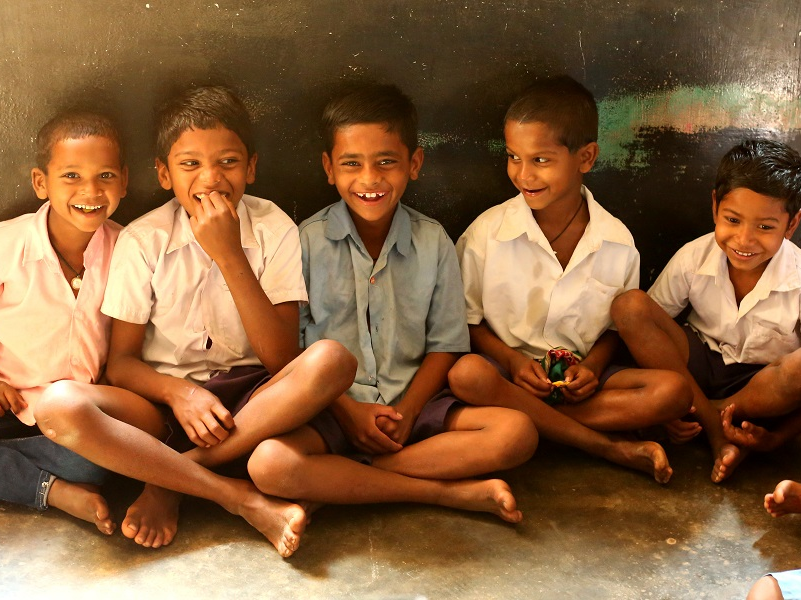
When I think about the lessons that actually run my life, the ones that operate beneath the level of strategy or frameworks, that determine how I move when I'm not consciously deciding, most of them came from growing up in Kalahandi, not from any formal education or professional experience that followed.
Show up first, stay longest
In a context where institutional reliability is low, trust concentrates around people who show up. Not the most talented, the most credentialed, the most charismatic, the people who are consistently there. The teacher who never missed a class. The shopkeeper who opened every morning regardless. The community elder who appeared at every meeting without being asked.
I learned early that showing up is a strategy, not a default. Most people treat presence as the minimum requirement before the real work starts. I treat it as a competitive advantage, because I have watched what happens in environments where you cannot take it for granted.
Read what is happening, not what is being described
The described situation and the actual situation diverge constantly. This is true everywhere, but in places where the gap between what is announced and what is delivered has been large and persistent, you stop treating the announcement as the starting point. Government reports, institutional communications, third-party accounts, all of them are partial, all of them have interests, all of them lag the reality they claim to represent.
The habit this builds is not cynicism. It is a discipline of direct observation. What is actually happening? Not what does this document say is happening, not what do we expect, what is actually in front of me? In recruiting, in building a company, in reading a market, this question is more reliable than almost any other instrument.
Do not wait for the conditions to be right
There is no version of Kalahandi, in anyone's lived experience, where the conditions were right first and the work came second. The work has always come in conditions that are not right. You adapt to what is. You build with what is present, not what you wish were present.
This habit runs against a particular form of procrastination that gets mistaken for strategic patience, waiting for the moment when everything is in place. Everything is never in place. I have never once had conditions that were fully right. The people I have watched succeed in difficult environments shared one trait: they began anyway.
Efficiency is not a business principle. It is a survival instinct.
When resources are limited and waste has real costs, you stop treating efficiency as an optimization and start treating it as a baseline. You do not have the option of the inefficient solution. You learn to do the important thing and drop the rest, not as discipline but as necessity.
In professional life, this translates into a very short tolerance for work that doesn't move the thing forward. Not because I am impatient, but because I grew up in an environment that had no margin for it.
The gap between where you are and where you want to be is workable
This might be the most important one. Growing up in a place with a significant gap between the life I could see existing elsewhere and the life immediately around me produced a specific psychological orientation: the gap is a workable problem, not a permanent condition.
People who grow up in this gap either internalize it as ceiling or as starting point. I internalized it as starting point. I do not know exactly how, whether it came from teachers, from certain family members, from something in the culture of the place, but the orientation was that the distance between here and there is something you close through work, not something you accept as the definition of what is possible.
That single belief is responsible for most of what I have managed to build.
Growing up in a place with a significant gap between the life I could see existing elsewhere and the life immediately around me produced a specific psychological orientation: the gap is a workable problem, not a permanent condition.
What formal education added, and didn't add
I want to be fair to the education and professional experience that followed growing up in Kalahandi. Both added things the childhood environment couldn't: exposure to how other environments work, frameworks for making sense of patterns I had only observed intuitively, networks that opened doors that would otherwise have been closed.
What they didn't add, what they couldn't add, because it is not the kind of thing that can be taught from the front of a classroom, was the orientation that came from growing up with the gap always visible. The operational reflex toward showing up consistently. The reading of what is actually happening rather than what is being described. The bias toward beginning before conditions are perfect.
These run beneath the level of skill or knowledge. They are closer to instinct, responses that have been reinforced so many times that they no longer require a decision. I don't choose to show up early. I don't choose to prefer direct observation over institutional description. I don't choose to start before I have full confidence in the conditions. These things just happen, because they were the baseline response in the environment where my reflexes were formed.
I am not arguing that Kalahandi was an optimal childhood environment for professional formation. It wasn't. There are real costs to growing up with limited access to infrastructure, educational resources, and peer networks that expose you to what's possible elsewhere. I saw those costs in people around me and I know I paid some of them myself.
What I am arguing is that the costs came with something attached, a set of operational instincts that have been more durable and more useful than almost anything I have learned since. The formal education was the surface layer. The childhood was the foundation. Most of the time, when something actually works in how I operate, it traces back to Junagarh.
I don't choose to show up early. I don't choose to prefer direct observation over institutional description. I don't choose to start before I have full confidence in the conditions. These things just happen, because they were the baseline response in the environment where my reflexes were formed.
Manas Majhi grew up in Junagarh, Kalahandi, Odisha. He writes about opportunity, development, and the systems that fail to distribute either equitably. He is the founder of Majhi Group and Majhi OS.
See also: Growing Up in an Odia Medium School, Growing Up in Kalahandi, Kalahandi and the Opportunity Gap
Sources
World Bank Human Capital Index 2024
Angela Duckworth: Grit: The Power of Passion and Perseverance
Frequently Asked Questions
What are the most important lessons from growing up in a place with limited resources?
Consistency outperforms talent when institutional reliability is low, the people who show up every day accumulate trust that talent alone doesn't generate. Direct observation matters more than official descriptions, in contexts where institutional narratives often lag or misrepresent reality, the habit of asking 'what is actually happening?' rather than 'what does this document say is happening?' is a significant advantage. And the discipline of starting before conditions are fully right, which is the only way anything gets built in difficult environments, transfers directly into entrepreneurship and building.
How does growing up in a place like Kalahandi shape someone's professional approach?
A few things compound. Efficiency stops being a preference and becomes a baseline, when resources are genuinely limited and waste has real costs, you develop a short tolerance for work that doesn't move the thing forward. The gap between where you are and where you want to be stops feeling like a permanent condition and starts feeling like a workable problem, this shift in orientation is probably the most important thing growing up in Kalahandi gave me. And the habit of reading what is actually happening rather than what is being described prepares you well for any domain where the official version and the real version diverge.
Can lessons from a resource-constrained childhood apply in well-resourced professional environments?
Yes, and often they apply more powerfully there. In well-resourced environments, the habits that resource constraints build, consistency, efficiency, direct observation, the willingness to start before everything is in place, become differentiators rather than survival mechanisms. Most people in well-resourced environments have the option of inefficiency, the option of waiting for better conditions, the option of treating presence as optional. The person who doesn't take those options, because they never had them available, operates differently. The lessons don't stop being useful. The context changes.
Did this land? Push back? Add something I missed?
Reply to Manas →Continue Reading
Related writing
 Kalahandi
What Kalahandi Taught Me About Opportunity
Opportunity is not a place or a thing. It is a condition. Kalahandi made that visible before I had the language for it.
 Kalahandi
Why Places Like Kalahandi Produce Determined People
Not because hardship builds character. But because certain environments select for a specific kind of operational capacity.
 Kalahandi
Growing Up in an Odia Medium School
There was no computer lab, no library worth the name, no English anywhere nearby. What there was: structure, teachers who treated curiosity as its own reward, and a quiet assumption that shaped everything that came after.