Talent From Small-Town India
The most underestimated talent in India is not in the cities. The cities just have better infrastructure for making it visible.

Founder, Majhi Group & Majhi OS
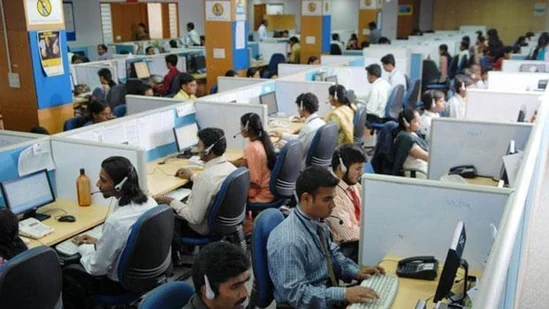
The talent isn't in the metros. The metros just have better infrastructure for making it visible.
The people who built the IITs, the consulting firms, the VC-backed startups, many of them came from places like Kalahandi. They didn't start there. They passed through the translation layer: a family that bet on education over immediate income, a government school teacher who pushed harder than the system required, years of preparation without a peer group, a coaching centre that may or may not have been worth the bus journey. And they made it through.
The ones who didn't make it through weren't less capable. The translation layer failed them.
What getting out requires
Getting from a small town in interior Odisha to a competitive Indian university requires a specific sequence of things to go right.
A family that values education against the economic pressure of putting a child to immediate work. A school, often an Odia-medium government school, with teachers capable enough and willing enough to push students toward competitive exams they themselves may not have taken. Access to preparation materials that are assumed to be available but often are not. The ability to sustain focus on a five-year preparation horizon when the payoff is abstract and the opportunity cost is concrete.
Each of these has failure modes. Most students from places like Kalahandi do not clear all of them. Not because the capability isn't there, but because the translation layer, the infrastructure that converts raw capability into institutional recognition, is broken or absent.
The ones who make it through anyway are a filtered group. The filter is not intelligence. It is persistence under conditions that were not designed to help them.
What this means about capability
When I encounter someone from a small-town background who has made it to a competitive position, my prior on their operational capability is high, and specifically high on the dimensions that matter most in hard situations.
Problem-solving without the right tools. Making decisions without complete information. Continuing to execute when the system is not cooperating. These are the skills that institutional pedigree does not guarantee and that small-town background, if cleared, tends to produce.
This is not romanticizing disadvantage. The disadvantage was real and caused real harm, to the people who had the capability and did not clear the translation layer, to the industries that never got access to what those people could have produced. The romanticization of hardship usually benefits the people narrating it, not the people who lived it.
What I am saying is narrower: for the people who did make it through, the specific difficulty of the path tends to produce specific capabilities. Those capabilities are real and undervalued by selection systems that optimize for institutional signal rather than operational evidence.
The institutional gap
India's talent infrastructure is heavily concentrated. The best coaching centres, the best schools, the best networks, the best early-career opportunities, all of it clusters in a handful of cities. The infrastructure compounds: a better school leads to a better college leads to a better first job leads to better mentorship leads to better outcomes. The compounding works in both directions. The starting condition matters a great deal.
This means that a substantial portion of India's capability is sitting in places the market has not gotten to yet. Not because the capability isn't there. Because the infrastructure that makes capability visible and usable, the translation layer, hasn't reached there.
The people who make it out of places like Kalahandi into competitive positions are not the ceiling of what those places contain. They are the floor of what the current infrastructure can surface.
What changes this
The deeper shift is in how talent gets identified. Credential-first hiring, filter by institution, then by company, then by network, is a selection system that works only as well as the institutions it filters through. When those institutions are inaccessible to most of the country, you get a system that mistakes access for ability.
Capability-first hiring, what can this person actually do, under what conditions, with what evidence, surfaces people the credential filter systematically misses. This is not altruism. It is better selection. The Odia medium government school graduate who figured out the path without a guide has demonstrated something the IIT graduate, who followed a well-marked route, has not yet been tested on.
I hire differently because I grew up watching what capable people look like before the system has gotten around to recognizing them. That's not a framework I developed in business school. It is what Kalahandi made obvious.
The Odia medium government school graduate who figured out the path without a guide has demonstrated something the IIT graduate, who followed a well-marked route, has not yet been tested on.
Manas Majhi grew up in Junagarh, Kalahandi, Odisha. He writes about opportunity, development, and the systems that fail to distribute either equitably. He is the founder of Majhi Group and Majhi OS.
See also: Kalahandi and the Opportunity Gap, Lessons From Rural India That Apply Globally, The Kalahandi Most People Never See
Sources
LinkedIn India: Talent Trends: Skills-First Hiring in India
McKinsey Global Institute: India's Labour Market: A New Emphasis on Employability
Frequently Asked Questions
What is the translation layer and why does it fail for small-town talent?
The translation layer is the infrastructure that converts raw capability into institutional recognition: a family willing to bet on education over immediate income, a school with teachers capable of preparing students for competitive exams, access to preparation materials, and the capacity to sustain a five-year focus on an abstract payoff. Each of these has failure modes specific to places like Kalahandi. The filter isn't intelligence, it's whether the entire chain holds. Most students from interior Odisha don't clear all of them, not because the capability isn't there but because the translation infrastructure is broken or absent. The people who do make it through have cleared a selection process that credential systems don't see or credit, which is why they're systematically undervalued by hiring processes that mistake institutional access for ability.
What specific capabilities do people from small-town backgrounds tend to develop that credentials don't surface?
Problem-solving without the right tools. Making decisions without complete information. Continuing to execute when the system is not cooperating. These are the skills that institutional pedigree doesn't guarantee and that small-town background, if cleared, tends to produce. The person who got from Kalahandi to a competitive position without a guide has demonstrated: the ability to navigate without a map, to sustain focus on a long-horizon goal without social proof, to operate in environments where the default conditions don't apply. The IIT graduate followed a well-marked route. The Odia-medium government school graduate who figured out the same destination without the route has been tested on something the other hasn't.
What would capability-first hiring change about talent selection?
Credential-first hiring, filter by institution, then company, then network, works only as well as the institutions it filters through. When those institutions are inaccessible to most of the country, the system mistakes access for ability. Capability-first hiring asks: what can this person actually do, under what conditions, with what evidence? This surfaces people the credential filter systematically misses. It's not altruism, it's better selection. The operational capabilities that small-town people who cleared the translation layer demonstrate, constraint navigation, long-horizon focus, first-principles problem-solving, are exactly the capabilities that matter most in hard business situations. Selecting for institutional signal optimizes for a different set of qualities, and often a less predictive one.
Did this land? Push back? Add something I missed?
Reply to Manas →Continue Reading
Related writing
 Kalahandi
The Kalahandi Most People Never See
A place is not a gap. And the Kalahandi I grew up in is not the Kalahandi that appears in the data.
 Kalahandi
Why Places Like Kalahandi Produce Determined People
Not because hardship builds character. But because certain environments select for a specific kind of operational capacity.
 Kalahandi
Lessons From Rural India That Apply Globally
The lessons from building in a constrained environment are not sentimental, they are structural. Resource scarcity forces prioritisation. Weak infrastructure forces self-reliance. Unreliable systems force redundancy thinking. These are the same capabilities that make companies resilient under pressure. They are just harder to develop when everything works.