What Travel Teaches Us About Home
You cannot see where you are from until you have been somewhere else — and the seeing changes everything.
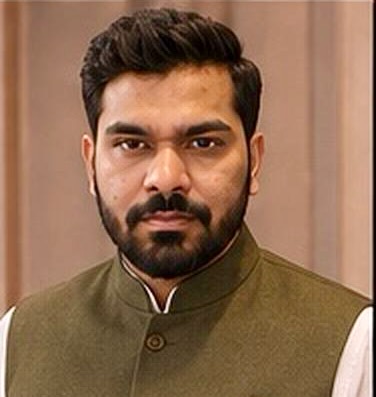
Founder, Majhi Group & Majhi OS

The first time I traveled outside Odisha, I thought I was going somewhere better.
I was wrong. I was going somewhere different — which turned out to be more useful.
The problem of proximity
We cannot see the place we are from. Not really. We are too close to it. The features of our native landscape — the problems, the beauties, the assumptions baked into daily life — become invisible through familiarity.
This is not a failure of intelligence. It is a feature of how human perception works. We stop seeing what has always been there. We mistake the familiar for the natural.
Travel breaks this. When you go somewhere else — somewhere with different assumptions, different systems, different ways of organizing daily life — the contrast makes the invisible visible. You return home seeing things you could not see before.
What I saw when I came back
When I came back to Odisha after spending time in different parts of India and later internationally, I saw it differently.
I saw the cultural richness more clearly. Pattachitra — the painted cloth scroll tradition from Raghurajpur — was something I had grown up knowing existed. But it was only after spending time in places where craft traditions had been commodified, flattened, turned into airport souvenirs, that I understood what was unusual about it: a living tradition, passed between generations within families, where the practitioners were not nostalgists but working artists. I had never thought to look twice at it because it was simply there. Absence had made it visible.
I saw the infrastructure gaps more clearly too. Not as personal failure or embarrassment — as a solvable problem with a gap that could be measured. Travel had shown me what was possible; home showed me the distance between what was possible and what existed.
Both observations were useful. Both required having been somewhere else.
The identity question
Travel also raises the identity question in a way that staying still does not.
When you are always among people like you, you do not have to define yourself. The definition is ambient — it comes from the context. When you are the only person from Kalahandi in a room full of people from other places, you discover that you have to articulate yourself.
That articulation is uncomfortable. It is also valuable. The process of explaining your home, your background, your assumptions to people who do not share them forces you to understand those things more clearly. You learn what is specific to you and what is general. You learn which of your beliefs are actually your beliefs and which are simply the local weather of where you grew up.
I spent years doing this — explaining Odisha to people who had never heard of it, explaining Kalahandi to people who had never heard of that, explaining what a government Odia-medium school education looks like to people whose reference points were entirely different. Every explanation was an education for me. The act of translation forced precision. I could no longer leave anything assumed.
What returning actually changes
The changed perception doesn't fade when you come home. That is the part that surprises people who haven't done it.
You expect that returning means returning to the old way of seeing. It does not. Once you have seen the infrastructure of a well-functioning city, you cannot unsee the infrastructure gaps of your own. Once you have seen how bureaucratic processes can be designed to serve people efficiently, you cannot stop noticing when they aren't. The contrast becomes permanently available as a reference.
This can make the return painful. Some people find it alienating — they have seen enough that they can no longer feel at home in the place they came from, without yet being fully at home anywhere else.
But it is also, if you let it be, generative. The gap you see is not a reason for despair. It is a measurement. And measurements tell you what to build.
The most useful thing travel gave me was not exposure to different cultures, or the languages I picked up fragments of, or the business relationships that formed across geographies. It was the ability to see the gap between how things are and how things could be — and to take that gap seriously as a problem worth working on rather than a permanent condition to accept.
The practical question
There is a practical dimension to this too.
The people I have known who traveled earliest and most widely were, on average, better at seeing opportunity — because they had multiple reference points for what was possible. They were less likely to mistake the constraints of their particular context for the constraints of reality.
This is not a coincidence. The ability to see across contexts — to recognize that the way things are done here is not the only way they could be done — is one of the most powerful cognitive advantages a person can develop. It is also one of the most transferable. It applies to business, to institutions, to personal decisions. Wherever the question is "is this the best we can do?", someone who has seen alternatives has an advantage over someone who has only ever seen this.
Odisha has more potential than most Odias believe. India has more potential than most Indians believe. The people who see that potential most clearly, in my experience, are the ones who have been somewhere else and come back with new eyes.
The going is not the destination. The going is how you learn to see. And what you see when you come back is the work that needs doing.
Go somewhere. Come back.
Then build what you couldn't see before you left.
Continue Reading
Related writing
 Travel
What Home Looks Like From Far Away
Distance clarifies things that proximity obscures. The place you grew up looks different from London than from Bhawanipatna. Not because it has changed — because you have a reference point now, and the reference point changes everything you see.
 Travel
What Travel Has Taught Me
Travel has been a more useful education than most of the formal education I received. Not because of the destinations, but because of the specific kind of disorientation that comes from being somewhere that doesn't fit your assumptions.
 Travel
Places That Changed How I Think
Not every place you visit changes anything. A few do — not because of what they look like but because of what they make visible that was invisible before. These are the ones that changed something specific.