Digital Public Infrastructure
India built something the rest of the world is still trying to understand: open, interoperable digital rails that no single company owns.

Founder, Majhi Group & Majhi OS
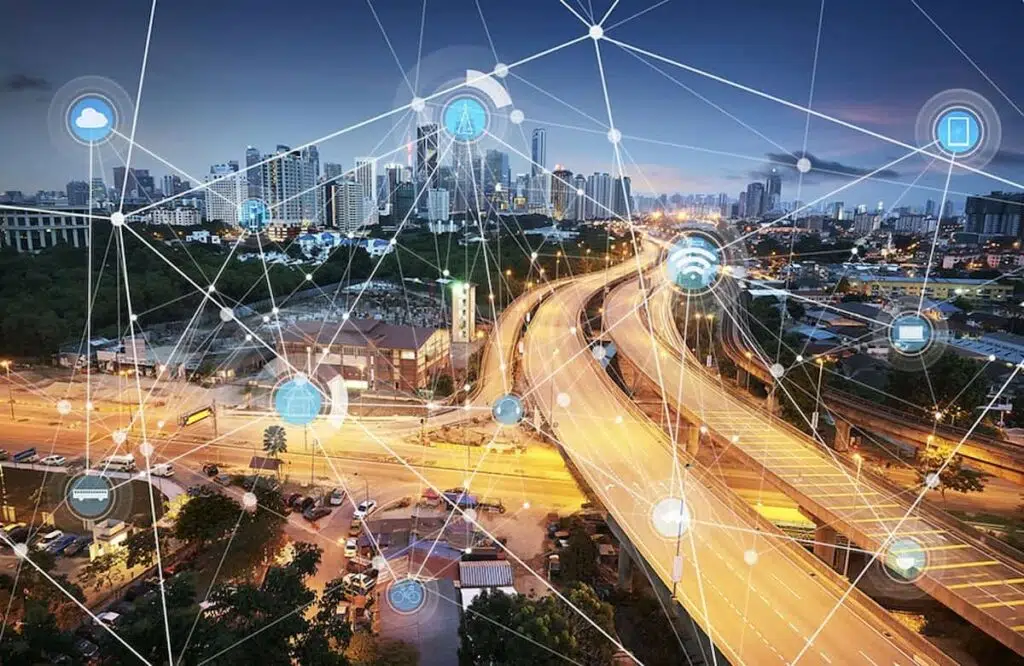
In most discussions of technological leadership, the framing is about which companies are winning, which products are dominant, which platforms have the most users. India's most important technological achievement over the past decade fits none of these frames. It is not a company. It is not a product. It is infrastructure, and the distinction matters enormously.
The India Stack, Aadhaar, UPI, DigiLocker, and the layers built on top of them, represents something genuinely new in how countries approach digital development. The core insight was deceptively simple: instead of building applications, build the infrastructure that makes a generation of applications possible, and make that infrastructure open, interoperable, and not owned by any single private actor.
Instead of building applications, build the infrastructure that makes a generation of applications possible - open, interoperable, owned by no one. India did this. Most countries are still trying to understand what they built.
Why public infrastructure matters
The pattern in most countries has been that the essential infrastructure for digital services gets built by private companies and owned by them. Payment rails, identity verification, data portability, these get built as proprietary systems, optimized for the interests of the platform that built them.
This creates a specific structural problem: the infrastructure that everyone needs to operate becomes owned by companies with specific commercial interests, and those interests do not always align with broad access, competition, or the kind of open interoperability that would produce the best overall outcomes.
India's approach was to draw a different boundary between public goods and private innovation. The question they asked was: what is the infrastructure layer that is most valuable to everyone but that no individual company has the right incentive to build as open infrastructure? And then build that, publicly, and allow private companies to compete on the application layer above it.
What this produced
UPI is the most visible result. Payment infrastructure built as a public utility, available to any authorized provider, producing transaction volumes that dwarf most national payment systems. The velocity of adoption, from launch to hundreds of millions of transactions per month, reflects what happens when the infrastructure is genuinely accessible rather than controlled by incumbents with reasons to manage adoption carefully.
Aadhaar demonstrated that population-scale digital identity is possible, with all the controversy that brings about privacy and inclusion, which are real concerns that deserve serious engagement. But the underlying capability, a verified digital identity that can be used across contexts, owned by the individual rather than any platform, represents infrastructure that most countries are still trying to figure out how to build.
The ONDC (Open Network for Digital Commerce) is the most recent and most ambitious iteration of this model, an attempt to apply the same logic to e-commerce, preventing the winner-take-all concentration that has characterized e-commerce development elsewhere.
That's what got built. The harder question is whether anyone else can build it too.
What the rest of the world is learning
The concept of Digital Public Infrastructure is now being discussed in policy circles globally in ways it was not five years ago. The G20, under India's presidency, made DPI a central theme. Development organizations are studying the India Stack as a model for emerging economies trying to leapfrog legacy infrastructure constraints.
The core question being asked is: can the India model be replicated? Can other countries build the same kind of open, interoperable infrastructure without the specific political economy, regulatory environment, and institutional capacity that made India's version possible?
The honest answer is that replication is hard in ways that are underappreciated. The India Stack required sustained political will, strong technical institutions, and a particular moment in India's development trajectory where the conditions aligned. These conditions do not exist everywhere.
But the model itself, the idea that digital infrastructure should be a public good, open and interoperable, rather than a proprietary layer owned by private platforms, is almost certainly right, and India's implementation has done more to demonstrate its feasibility than any amount of theoretical argument could have.
What comes next
The infrastructure is in place. The competition is now on the application layer, where private companies are building on open rails in ways that would not have been possible with proprietary infrastructure.
The next phase is about how this infrastructure evolves as AI becomes central to digital services, and whether the same public infrastructure logic that worked for identity and payments can extend to the AI layer. That question is not yet answered. How India answers it will matter as much as any of the decisions that created the India Stack in the first place.
UPI processed 172 billion transactions in 2024 - built on open rails owned by no single company. That is a design philosophy, not a market outcome. Most countries are still figuring out that the design philosophy was the point.
See also: AI Adoption in Rural India, Building for a Billion People, State Capacity Is the Ultimate Competitive Advantage, From Freedom to Capability
Sources
NPCI UPI Product Statistics: transaction volumes
UPI processes 172 billion transactions in 2024: DD News
G20 India 2023: Digital Public Infrastructure as global framework
Frequently Asked Questions
What is India's Digital Public Infrastructure (DPI) and what makes it significant?
India's DPI, built around Aadhaar (biometric identity for 1.3 billion people), UPI (open payment rails that processed 172 billion transactions in 2024), and layers including DigiLocker, ONDC, and the Account Aggregator framework, is significant because it was built as public infrastructure rather than proprietary platforms. The core design decision: build the essential infrastructure layer as open, interoperable, not owned by any single company, and let private competition happen on the application layer above it. This produced a payment system more accessible and more innovative than most national alternatives.
Can other countries replicate India's DPI model?
Replication is hard in ways that are underappreciated. India's DPI required sustained political will, strong technical institutions (particularly NPCI and UIDAI), and a specific moment in India's development trajectory when the conditions aligned. These don't exist everywhere. But the model itself, digital infrastructure as a public good, open and interoperable rather than proprietary, is almost certainly right, and India's implementation has done more to demonstrate its feasibility than any theoretical argument could have. The G20 made DPI a central theme under India's 2023 presidency, reflecting how seriously other nations are studying the model.
What comes next for India's digital infrastructure?
The next question is whether the same public infrastructure logic that worked for identity and payments can extend to the AI layer. India has open data, open identity, and open payment rails. Whether it can build open AI infrastructure, or whether AI in India gets captured by proprietary platforms, will matter as much as any of the decisions that created the India Stack in the first place.
Did this land? Push back? Add something I missed?
Reply to Manas →Continue Reading
Related writing
 India
IndiaThe Most Underrated Innovation in India
Everyone talks about the apps and the unicorns. The actually interesting stuff is the infrastructure underneath.
 India
IndiaFrom Freedom to Capability
India did not simply move from poverty to prosperity after 1947. It moved from dependence toward capability, one institution, one dam, one steel plant, one satellite at a time. The next chapter is not about building more of it. It is about unlocking what has already been built.
 India
IndiaAI Adoption in Rural India
India's AI story is being written in Bengaluru and Mumbai. The more important story, the one that determines whether AI expands or concentrates opportunity in India, is being written in the districts that the first wave of technology only partially reached.