How 4G Changed India
The 2016 data disruption did not just make the internet cheaper. It rewired what India could become.

Founder, Majhi Group & Majhi OS
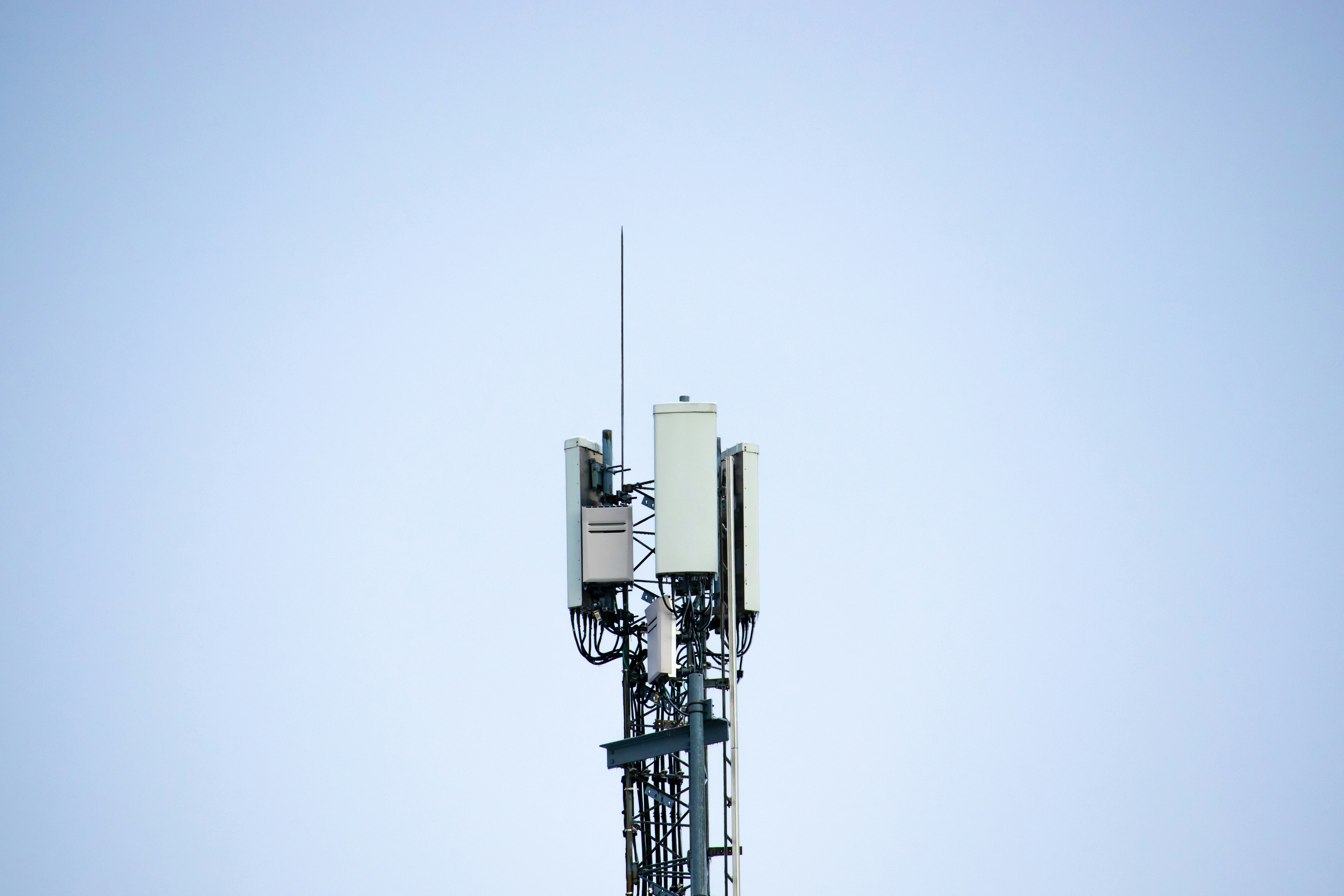
I remember the first time a candidate I was trying to reach, someone in a district town in Odisha, picked up a video call. Not because video calls were new. Because it was the first time the connection was good enough for it to actually work. This was 2017. The year before, reaching that same person required a phone call on a bad line or nothing at all.
That shift was not a minor convenience. It changed what was possible from where I was building.
In September 2016, Jio launched with a free data offer that effectively made mobile internet a mass commodity in India. The immediate effect was easy to describe: data prices collapsed, Jio acquired 50 million subscribers in 83 days, the fastest subscriber acquisition in telecom history, and the existing telecom industry was forced into a consolidation that reshaped the entire sector.
The deeper effects were harder to see at the time and are still unfolding.
What actually changed
Before 2016, mobile internet in India was expensive relative to median income, expensive enough that it was a considered purchase rather than a default utility. The smartphone was in many people's hands; the data connection to use it meaningfully was not. This created a bifurcated situation where the device that could transform someone's access to information, services, and economic opportunity sat in their pocket largely underutilized.
The data disruption did not just lower a price. It changed the category. When data became cheap enough that people stopped tracking their consumption, when it became analogous to electricity rather than a luxury item, behavior changed in ways that price reductions alone do not produce.
Content consumption exploded. YouTube, which had existed in India for years, suddenly became the entertainment medium of choice for hundreds of millions of people who had never had a practical way to watch it. Regional language content that had never found a distribution channel found one. Languages and cultures that had been largely excluded from the digital information ecosystem began to have a presence.
Financial services changed. The smartphone became the access point for banking for hundreds of millions of people who had never had a practical banking relationship. The combination of cheap data, Aadhaar-based identity verification, and UPI payment infrastructure created conditions for financial inclusion at a scale and speed that no previous policy effort had achieved.
The second-order effects
The first-order effects were about access. The second-order effects were about what access enables over time.
A generation of Indians who came online in 2016 and 2017 are now several years into their digital lives. They have developed digital skills, digital histories, and digital expectations. They are now potential customers for sophisticated digital services, potential participants in digital economies, and potential contributors to digital creation.
The creator economy in India, regional language YouTubers, Instagram creators, vernacular podcast hosts, was enabled by cheap data. Before 2016, the audience for this content was too dispersed and too constrained by data costs to be economically meaningful. The data disruption created an audience, and the audience created a creator economy.
The gig economy expanded dramatically. Platforms connecting workers and customers, delivery, transportation, professional services, require ubiquitous smartphone connectivity to function. The data disruption extended the geographic reach of these platforms and brought more workers and customers into the network.
What it reveals about development
The 4G story reveals something important about how development works that is underappreciated in traditional development economics.
Connectivity is not just a feature of a modern economy. At some threshold of penetration and affordability, it becomes a precondition, the infrastructure on which everything else gets built. The economic returns to connectivity investment are not linear; they compound as network effects activate, as the density of connected people creates the conditions for digital services that require critical mass to be viable.
India got a compressed version of a transition that other countries went through more slowly. The compression created disruption, to the telecom sector, to incumbents across multiple industries, but also created conditions for rapid digital development that would not have been possible without it.
The lesson is not that disruption is always good. It is that the sequencing matters. Infrastructure first, applications second. And that sometimes a single infrastructure decision, the right price at the right time, does more to change the trajectory of a country than any number of deliberate development programs.
Sometimes a single infrastructure decision - the right price at the right time - does more to change the trajectory of a country than any number of deliberate development programs.
Where it ends
We are still inside the story. The people who came online in 2016 have only been online for a decade. The services and economies and cultural transformations enabled by their connectivity are still early.
What we can say is that the trajectory changed. The arc of Indian digital development after 2016 is different from what it would have been without the data disruption. How different, and whether the ultimate outcome is as good as the potential suggests, depends on what gets built on the infrastructure that is now in place.
The infrastructure is there. By 2024, India had over 800 million internet users, the large majority on mobile, most of them first-time internet users who came online not through broadband but through Jio's data pricing. What gets built for this audience over the next decade is the question that matters.
The creator economy in India - regional-language YouTubers, vernacular podcast hosts, Instagram creators building in Bhojpuri, Tamil, or Odia - was enabled by cheap data. Before 2016, the audience for this content was too dispersed and too data-cost-constrained to be economically meaningful. Jio made the distribution economics viable.
See also: Building for a Billion People, Why India's Scale Matters, Digital Public Infrastructure
Sources
India IT industry data and internet user statistics: IBEF
Frequently Asked Questions
What was the scale of Jio's impact when it launched in 2016?
Jio acquired 50 million subscribers in 83 days after launch, the fastest subscriber acquisition in telecom history. More importantly, data prices in India dropped from among the most expensive in the world to among the cheapest in a single step. Within a year, India had transformed from a country where data was a considered purchase to one where it was effectively a utility. The downstream effects, on financial inclusion, content consumption, the creator economy, and gig work, took years to fully manifest but were rooted in that single pricing decision.
How many internet users did India gain as a result of the 4G revolution?
India went from roughly 350 million internet users in 2016 to over 800 million by 2024, most of them on mobile. The majority of this growth was in non-metro areas, among first-time internet users who came online not through broadband but through affordable smartphone data. This population, now several years into digital life, has developed digital expectations and skills that drive demand for increasingly sophisticated digital services.
What were the second-order effects of cheap data beyond access?
The second-order effects were about what access enables over time. The creator economy in India, regional language YouTubers, Instagram creators, vernacular podcast hosts, was enabled by the audience that cheap data created. The gig economy expanded its geographic reach as ubiquitous connectivity allowed platforms to function in smaller cities. Financial inclusion advanced as smartphones became the access point for banking for hundreds of millions of people who had never had a practical banking relationship. UPI's adoption is, in part, a downstream effect of Jio.
Did this land? Push back? Add something I missed?
Reply to Manas →Continue Reading
Related writing
 India
IndiaAI Adoption in Rural India
India's AI story is being written in Bengaluru and Mumbai. The more important story, the one that determines whether AI expands or concentrates opportunity in India, is being written in the districts that the first wave of technology only partially reached.
 India
IndiaBuilding for a Billion People
Scale at this magnitude is not just a bigger version of building for fewer people. It changes the problem entirely.
 India
IndiaWhy India's Scale Matters
When a country of 1.4 billion people solves a problem, the solution tends to be unusually robust. And unusually relevant.