The Cultural Life of Kalahandi
Every account of Kalahandi leads with poverty data. What it misses is that places shaped by sustained constraint develop cultural systems, festivals, food, community structures, that places built without adversity rarely develop. The culture is not separate from the hardship. It's the response to it.

Founder, Majhi Group & Majhi OS
I want to start somewhere specific: a wedding in a village deep in Kalahandi.
Not the wedding as spectacle, not what an outside observer would notice first, but the logistics of it. Three hundred people fed across two days. Food cooked on wood fires that started before the sun came up. Music that was not performed so much as happened, as if the sound emerged from the occasion itself rather than from the people making it.
The weddings I have attended in hotels in Bengaluru and Mumbai are produced. They have event managers and caterers and DJs and timeline documents. They are impressive and expensive and, in a way that I can only describe accurately and not diplomatically, hollow.
The wedding in Kalahandi was not produced. It was done, by the community, for the community, with a density of care and labor and attention that no amount of money can quite replicate. The aunties who had been cooking since 4 AM were not caterers. They were neighbors.
That is Kalahandi's cultural texture. It is worth naming, because the rest of India mostly encounters Kalahandi as a policy problem or a development statistic, and both of those framings miss what the place actually is.
The agricultural foundation
Kalahandi's culture is rooted in agriculture. Not as metaphor, as actual reality. Most of the district's population has depended on the land, the rains, and the seasons for its survival and identity. That relationship shapes everything else: what is celebrated, how time is marked, what kind of community structures form and persist.
The most important festival in this agricultural world is Nuakhai, the harvest festival of western Odisha, including Kalahandi.
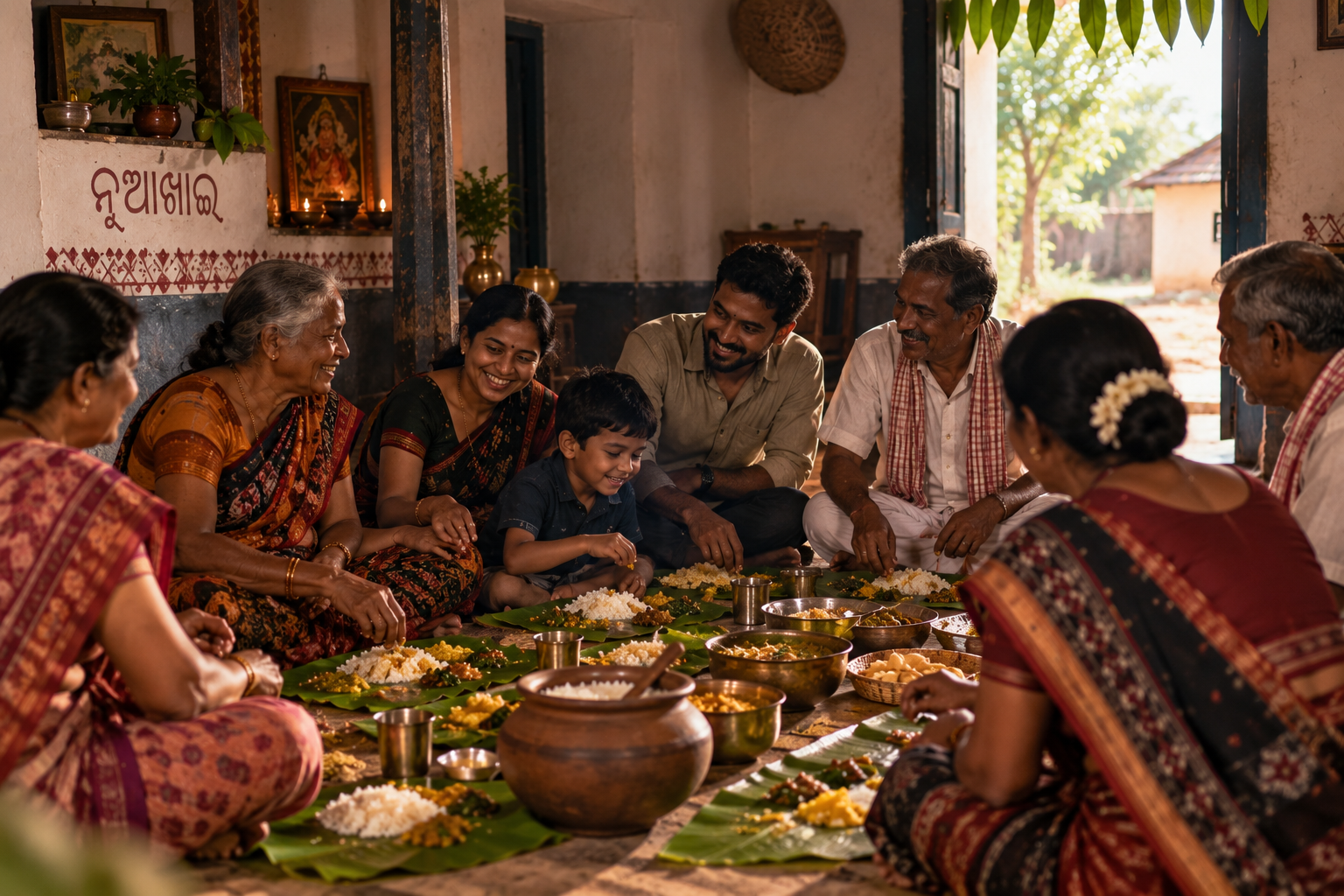
Nuakhai is celebrated in the month of Bhadra (typically August-September), the day after Ganesh Chaturthi. The ritual centers on the tasting of new rice: the first rice of the harvest season is offered to the presiding deity and then shared among family members, beginning with the eldest. It is a ceremony of first fruits, of gratitude and community.
What makes Nuakhai different from many festival descriptions I encounter is how un-commercialized it remains. There is no Nuakhai gift industry in the way Christmas has one. There is no Nuakhai-themed product marketing. The festival exists in its original social form: family gathering, ritual offering, communal eating, community reaffirmation.
Coming home to Junagarh around Nuakhai, catching up with friends I haven't seen in months or years, sitting with elders who know my family history, eating food that is specific to this festival and this place, is a kind of restoration that nothing else quite produces. Not because it is nostalgic (I am not a person who lives in the past) but because it reestablishes context. It reminds you what the people in your life actually are to you, stripped of the professional interactions and digital mediation that dominate urban life.
The tribal dimension
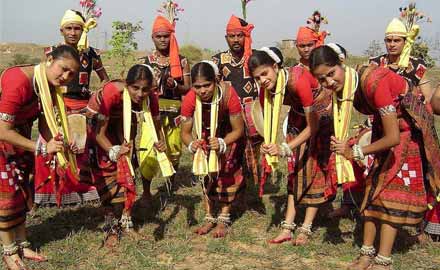
Kalahandi's culture is not a single thing. It is a layered reality: Odia culture, western Odia (Kosali/Sambalpuri) culture, and the distinct cultures of the tribal communities who have inhabited these hills and forests since before any of the other cultural layers arrived.
The Kondh people are the largest tribal community in Kalahandi. The Dongria Kondh, whose homeland is the Niyamgiri Hills, are perhaps the most visible internationally, due to the decade-long legal battle over bauxite mining in their sacred landscape. But the Kondh cultural world is far larger than that one episode.
Kondh culture is organized around the forest, the land, and the community's relationship with both. Agricultural practices, seasonal ceremonies, community governance structures, and artistic traditions, including distinctive jewelry, textile work, and oral traditions, constitute a living culture that has adapted over millennia.
The weekly haats (markets) that occur in villages across Kalahandi's interior are, for visitors willing to seek them out, perhaps the most immediate window into the district's tribal cultural life. These markets are not tourist attractions. They are functional trading systems where communities exchange agricultural produce, crafts, and goods. But they are also social occasions, spaces where people from different communities encounter each other, where languages mix, where the social life of the interior is visible in a way it otherwise is not.
I have been to haats in parts of Kalahandi where the Hindi I was speaking was not the primary language, where the trade happening around me was organized by customs I didn't fully understand, and where my presence as a visitor was noted with curiosity rather than the performance that tourist infrastructure creates. That encounter is one of the things you lose as a place becomes more connected to the mainstream economy. It is also one of the things that makes places like Kalahandi genuinely irreplaceable while they still have it.
The Sambalpuri thread
Western Odisha has its own cultural identity that is distinct from the coastal Odia culture most people associate with the state. The Sambalpuri cultural world, centered on Sambalpur but extending across the KBK districts, Bargarh, Jharsuguda, and neighboring areas, has its own music, its own dialect, its own festival tradition, and one of its own defining art forms.
Sambalpuri textiles, the ikat-weave cotton and silk fabrics produced in the traditional weaving centers of western Odisha, are among the most technically distinctive handloom products in India. Single and double ikat techniques are used, with the double ikat (Bapta) requiring both warp and weft threads to be resist-dyed before weaving to create precise geometric patterns, demanding extraordinary skill and precision. The patterns are not decorative accidents; they are a visual language developed over generations.
Kalahandi has its own weaving traditions connected to this broader Sambalpuri heritage. The relationship between the weavers in Kalahandi's market towns and the larger Sambalpuri textile ecosystem is part of the cultural economy of the district, an economy that is currently undervalued and underconnected to the markets that would pay for genuine handloom artistry.
There is an opportunity here that the broader GI (Geographical Indication) and handloom promotion conversation has not fully explored: Kalahandi textiles, in the context of Sambalpuri ikat traditions, could be part of a serious artisan economy if the production-to-market connection were better built. Premium handloom from a district with this cultural depth and story has the kind of provenance that certain buyers globally will pay for. Whether that potential is realized depends on infrastructure, marketing, and whether anyone builds the bridge.
The food
Every time I come home, there is food I cannot get anywhere else.
This is true of every place that has maintained its food traditions against the homogenizing pressure of the same packaged snacks and fast food chains that appear in every Indian town. Kalahandi's food is Odia in its base, western Odia in its flavor profile, and inflected by the agricultural reality of what the land produces.
The rice in western Odisha is different from coastal rice. The preparations are different. The chutneys, the lentil preparations, the seasonal vegetables from the fields and forests, these form a cuisine that is genuinely local in the way that the word "local" is supposed to mean: connected to this specific land, this specific season, these specific hands.
When I think about what Kalahandi's culture produces that the world cannot get elsewhere, food is near the top of the list. Not in a way that is currently organized into a restaurant or a delivery service or a cookbook. Just in the way that the specific knowledge of how to cook a thing in a way that makes it taste right is held, entirely, in the people who grew up cooking it.
That knowledge is perishable. Every generation that migrates takes it further from the next generation. Every young person who grows up in Bhubaneswar eating restaurant food rather than learning to cook at home is one step further from the knowledge.
I am not making an argument for people to stay when they should go. Migration is rational and often necessary. But the loss of specific cultural knowledge, food, textile techniques, oral traditions, languages, is real, and it is not automatically recovered when economic conditions improve.
The tradition of taking care of strangers
There is a quality I have noticed in Kalahandi, in villages and in towns, that I have not found equally elsewhere. It is the assumption of responsibility for a guest. Not hospitality as a performance, but as an expectation: that if someone is at your door, they will be fed.
I think about this when people in Indian cities discuss the concept of "smart cities" and urban development. The metrics of smart cities, connectivity, infrastructure, efficiency, are real goods. But they are not the only goods. The social infrastructure of a place that still knows how to feed a stranger is a form of wealth that does not appear in any GDP calculation.
The social infrastructure of a place that still knows how to feed a stranger is a form of wealth that does not appear in any GDP calculation.
It is also the thing I am most afraid of losing, as Kalahandi develops. Not the development, which is necessary and good. But the particular quality of human community that exists in places that have not yet organized themselves around anonymity and transaction.
The goal should be development that preserves what is worth preserving. That requires people who grew up in Kalahandi, who know what is worth preserving, to stay involved in how the district changes, not just to observe from a distance and feel nostalgic.
That is part of why I write about Kalahandi. Not to freeze it. To make sure the people who understand it have a voice in what it becomes.
What makes Nuakhai different is how un-commercialized it remains. No gift industry. No product marketing. The festival exists in its original social form: family gathering, ritual offering, communal eating, community reaffirmation.
Manas Majhi grew up in Junagarh, Kalahandi, Odisha. He writes about opportunity, development, and the systems that fail to distribute either equitably. He is the founder of Majhi Group and Majhi OS.
See also: Kalahandi's History Is Not What You Think It Is, What Nobody Tells You About Visiting Kalahandi, Building from Kalahandi
Sources
Frequently Asked Questions
What is Kalahandi's most important festival?
Nuakhai is the most significant harvest festival in western Odisha, including Kalahandi. Celebrated in Bhadra (August-September), the day after Ganesh Chaturthi, Nuakhai marks the tasting of the new rice harvest. It is a deeply community festival, families gather, elders are honored, new rice is offered to the deity and then shared across the family. In a predominantly agricultural district, Nuakhai is not merely a religious observance but an expression of the relationship between the land, the community, and the cycle of seasons.
What languages are spoken in Kalahandi?
Odia is the primary language of administration, education, and much of the urban and semi-urban population. Kosali (also called Sambalpuri), a related but distinct language spoken across western Odisha, is widely spoken in Kalahandi. Multiple tribal languages, including Kui/Kuvi (spoken by the Kondh communities), Gondi, and others, are spoken in the forested and hill areas. Kalahandi's linguistic landscape is layered, reflecting its position at the intersection of Odia-speaking, Sambalpuri-speaking, and tribal cultural worlds.
What tribal communities live in Kalahandi?
The Kondh (Kandha) people are the largest scheduled tribe community in Kalahandi, with sub-groups including the Dongria Kondh (associated with the Niyamgiri Hills), Desia Kondh, and Kutia Kondh. The Gond community is also present in parts of the district. Bhunjia, Saura, and other smaller tribal communities are found across the forest and hill areas. These communities maintain distinct cultural practices, agricultural knowledge, and relationships with the landscape that predate the modern administrative district.
What is Sambalpuri culture and how does it connect to Kalahandi?
Sambalpuri culture is the cultural tradition of western Odisha, encompassing music, textile (the famous Sambalpuri ikat weave), dance, and festival traditions centered around Nuakhai and associated with the Mahanadi river valley and surrounding areas. While Sambalpur is the cultural and administrative hub of this tradition, Kalahandi is part of the broader western Odia cultural sphere. The Sambalpuri dialect, the Nuakhai festival, and the woven textile traditions are all part of Kalahandi's cultural life.
Did this land? Push back? Add something I missed?
Reply to Manas →Continue Reading
Related writing
 Kalahandi
The Day Western Odisha Agreed to Wait for Each Other
I've missed Nuakhai more than once for work, for study, for the life I was building away from home. Perhaps that's why I now see the festival differently: the most important thing on the table was never just the rice. It was the people who made the effort to be there.
 Kalahandi
Kalahandi's History Is Not What You Think It Is
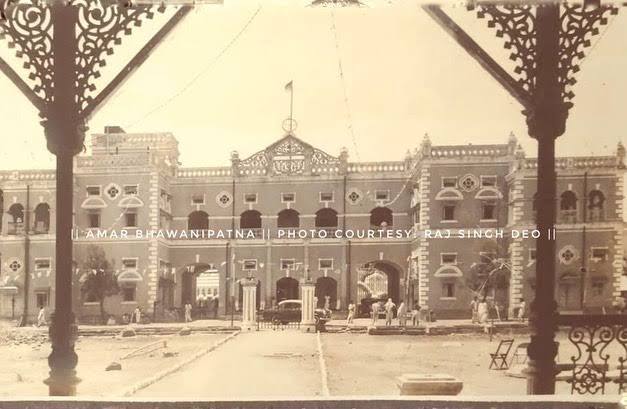
For most people, Kalahandi's history begins and ends with the 1985 famine. That is like knowing Britain only through the Blitz. A place is not its worst decade. Kalahandi is ancient, complex, and has been building itself, quietly, for a very long time.
 Kalahandi
What Nobody Tells You About Visiting Kalahandi
Odisha's most overlooked district has waterfalls, sacred hills, royal history, and tribal culture that most of India has never heard of. That invisibility is both the problem and, for now, the charm.