The Day Western Odisha Agreed to Wait for Each Other
I've missed Nuakhai more than once for work, for study, for the life I was building away from home. Perhaps that's why I now see the festival differently: the most important thing on the table was never just the rice. It was the people who made the effort to be there.
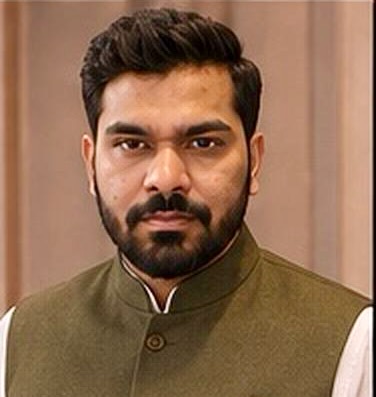
Founder, Majhi Group & Majhi OS
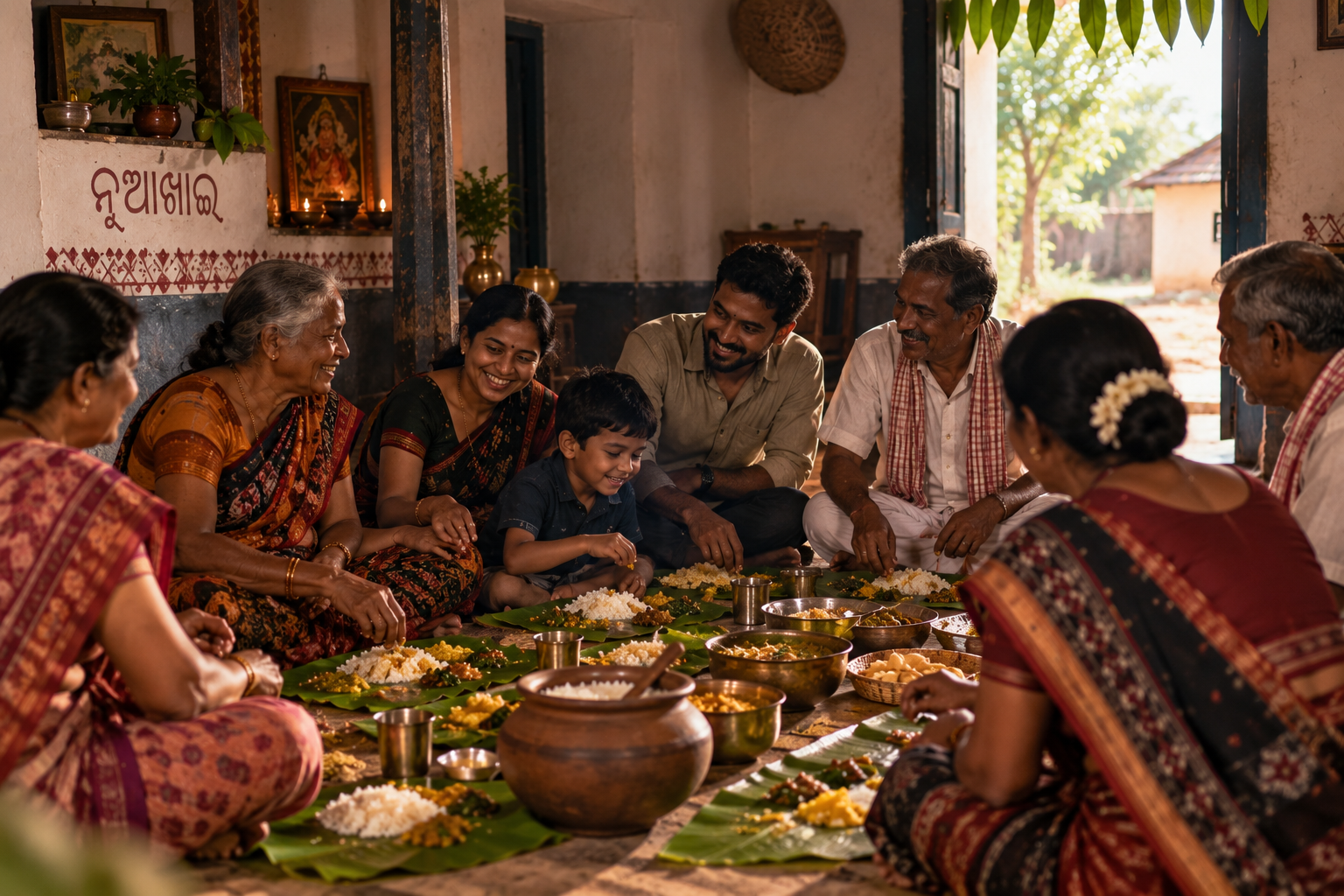
I've missed Nuakhai more than once.
Sometimes because of work.
Sometimes because of study.
Sometimes because the life I was building elsewhere simply did not fit neatly around the date I wanted to be home.
And every time, there was a strange feeling that is difficult to explain until you've experienced it yourself.
You don't just miss the food.
You miss the noise.
The people arriving.
The familiar arguments.
The conversations that begin with “Kete dina hela?” and somehow continue for hours.
You miss sitting at a table with people who knew you before you became whoever you are now.
When you're away, you begin to notice things you never noticed when you were home.
A familiar voice from the next room.
Someone calling you to eat.
Someone asking when you're leaving.
Someone complaining that you never stay long enough.
Ordinary things.
The sort of things you assume will always be there.
Until, one year, you're somewhere else.
It was only after missing Nuakhai myself that I began to understand something I had never really thought about before:
“Festivals are not really about the day. They are about who is there on that day.”
That is why the history of Nuakhai's calendar fascinates me.
Because western Odisha once had no single common Nuakhai day.
And then, in 1991, it deliberately chose one.
For centuries, there wasn't one common Nuakhai day
Today, we tend to think of Nuakhai as a festival with a date.
It wasn't always that way.
For centuries, the princely states of western Odisha followed their own calendars and determined their own auspicious time for the festival.
Same festival.
Different days.
Sambalpur had its traditions.
Patnagarh had its own.
Kalahandi had its own.
The people shared a culture, but the region did not share a single calendar.
There had been an earlier attempt in the 1960s to establish a common tithi. It failed.
Then, in 1991, the effort succeeded.
A common tithi—Bhadraba Shukla Panchami, the fifth day of the bright fortnight of Bhadraba—was established for Nuakhai across western Odisha. The state government subsequently recognized the occasion as an official holiday.
Some pockets and communities continue to observe Nuakhai according to a different local date or tithi. But those observances represent a very small minority compared with the overwhelmingly common practice across western Odisha.
It sounds like a small change to a calendar.
It wasn't.
Because by then, people were increasingly leaving home.
For work.
For study.
For better wages.
For opportunities that home could not always provide.
And suddenly, a common festival date meant something beyond getting the ritual right.
It meant people could plan.
Plan the leave.
Plan the ticket.
Plan the journey.
Plan to be home.
“A date became a possibility.”
I understand that sentence differently now than I once would have.
When you're young, a festival date is simply a date.
You don't think about what it takes for everyone to be there.
Later, when your own life begins to pull you in different directions, you start to see the machinery behind that simple gathering.
Leave has to be taken.
Tickets have to be found.
Journeys have to be made.
Plans have to bend.
And sometimes, despite all of that, someone still doesn't make it.
I've been that person.
The rice is the ritual. The meeting is the point.
That is what Bhetghat captures.
Meeting.
Reunion.
The person who has been away is suddenly sitting beside you.
The friend who moved to another city is back.
The house that was quiet is noisy again.
Someone is arguing in the kitchen.
Someone is laughing in the courtyard.
Someone has arrived without telling anyone.
Someone is asking why you've become so thin.
Someone is asking when you're leaving again.
For one day, distance loses.
This is why Nuakhai has never been only about the new rice.
It is about who gets to eat it with you.
Someone lives in Bhubaneswar.
Someone in Raipur.
Someone in Hyderabad.
Someone in Bengaluru.
Someone in Delhi.
Someone somewhere much farther away.
You may have built a life there.
You may be doing exactly what you once hoped you would do.
And yet, when Nuakhai comes around, home has a way of becoming very specific again.
A particular house.
A particular courtyard.
A particular table.
Particular people.
Distance turns those ordinary things into something else.
“Sharing a table with the people who cared for you long before you became someone in life.”
Maybe that's why photographs from home feel different during a festival.
You don't just see people eating.
You see the place where you were supposed to be sitting.
But coming home is not equally easy for everyone
This is where the story becomes less romantic.
I've been fortunate enough to miss Nuakhai because of choices I was making about work and study.
Not everyone gets that choice.
For some people, coming home is a plan.
For others, it is a negotiation.
Can I leave?
Will I be paid?
Can I afford the ticket?
Will there be a seat?
Will my employer let me go?
The distance may be the same.
The freedom to cross it is not.
For someone with paid leave, Nuakhai is a holiday.
For someone working on daily wages, through a contractor or in another precarious job, it can be a decision with consequences.
And that difference matters.
Because home is not equally accessible to everyone.
Sometimes the hardest part of being away isn't the distance.
It is knowing that the people waiting for you have no idea whether you'll make it back.
And sometimes, you don't know either.
“The distance may be the same. The freedom to cross it is not.”
We all know what it means to miss someone
You don't have to be from western Odisha to understand what it means to miss someone.
I've spent festivals away from home.
I've looked at the calendar knowing exactly where I wanted to be, while knowing that work, study or circumstance had other plans.
And perhaps that's what distance teaches you.
You begin to understand the value of things you once thought were simply part of life.
The voice from the next room.
The extra plate on the table.
The person asking when you're leaving.
The person asking when you're coming back.
The conversations you once considered ordinary.
The people you assumed you'd see again soon.
Maybe that's why “Next time” sounds different when you're away.
It isn't always a promise.
Sometimes it's simply the best answer you have.
What the common date really gave us
Not just a festival day.
A shared expectation.
Come home.
That is a surprisingly powerful thing for a region to agree on.
Because home is not always a place anymore.
For many of us, it is a date.
A day when the calendar seems to say:
This is when you are supposed to be here.
Some will make it.
Some won't.
Some will arrive late.
Some will leave early.
Some will be there only for a few hours before catching the next train back.
And some chairs will remain empty.
I've occupied both sides of that absence.
I've been at the table.
And I've missed the table.
I know what it feels like to be in that chair.
And I know what it feels like not to be.
Perhaps that's why I no longer see the common date as merely a calendar decision.
I see it as an invitation.
An invitation that cannot force anyone to come home.
But at least gives them a day worth trying for.
The table
Basi comes the day after Nuakhai.
The ceremony becomes lighter.
The food becomes a feast.
Life starts again.
Perhaps that's fitting.
Because Nuakhai is not really about escaping ordinary life.
It is about interrupting it long enough to remember who matters.
I used to think coming home for Nuakhai was simply something that happened.
You knew the date.
People came.
Families gathered.
Life made room.
It was only after missing it myself—because of work, because of study, because life happened elsewhere—that I understood how much had to happen for that simple scene to be possible.
Someone had to get leave.
Someone had to find the money.
Someone had to book the ticket.
Someone had to travel through the night.
Someone had to keep the food ready.
And someone had to leave a place at the table.
That last part is easy to overlook.
Until you're the person who isn't there.
That is what makes the story of Nuakhai bigger than a harvest festival.
In 1991, western Odisha did something remarkably human.
It created a common day.
Not because the rice needed it.
Because the people did.
The calendar became a way of saying:
Wherever you are, this is when we hope you'll come home.
I've missed that day before.
I may miss it again.
But perhaps that's why I understand what it means.
Nuakhai does not wait for late trains.
It does not wait for work to become convenient.
It does not wait for life to become easy.
But every year, the table is set anyway.
Someone prepares the food.
Someone waits for the others to arrive.
Someone looks at the door.
Someone checks the phone.
Someone asks:
“Kebe asuchha?”
And sometimes, you make it.
Sometimes, you don't.
But the invitation remains.
Perhaps that is what western Odisha was really doing when it chose a common day.
It wasn't making everyone come home.
It was simply making it a little easier to try.
Because sometimes, that's all a date can do.
It can't shorten the distance.
It can't guarantee leave.
It can't buy the ticket.
It can't change the life you've built somewhere else.
But it can give you a reason to look at the calendar and think:
“Maybe this year, I'll make it home.”
And maybe that's enough.
Not the rice.
The people.
Not the festival.
The table.
See also: The Cultural Life of Kalahandi, Rain, Debt, and Distance, Kalahandi's History Is Not What You Think It Is
Sources
- Government of Odisha, Odisha Review — historical account of Nuakhai, including the separate local calendars, the unsuccessful 1960s attempt and the common tithi established in 1991.
- Government of India, Census of India — migration data and reasons for migration.
- The New Indian Express — contemporary reporting on the common Nuakhai date and its role in bringing families together.
- Chitrasen Pasayat — scholarly discussion of Nuakhai, regional integration and its changing social significance.
Frequently Asked Questions
What does Nuakhai mean?
Nuakhai comes from two Odia words: nua, meaning new, and khai, meaning eating. It marks the first tasting of the season's new rice, offered first to the presiding deity before it is eaten by the family.
Did western Odisha always celebrate Nuakhai on the same day?
No. Historically, the princely states of western Odisha followed their own calendars and determined their own auspicious time for Nuakhai. A common tithi was successfully established in 1991, after an earlier attempt in the 1960s had failed. Some pockets and communities continue to observe Nuakhai according to a different local date or tithi, but these represent a very small minority.
When is Nuakhai celebrated?
Nuakhai is generally observed on Bhadraba Shukla Panchami, the fifth day of the bright fortnight of Bhadraba, usually the day after Ganesh Chaturthi. The exact Gregorian date changes each year.
What is Nuakhai Bhetghat?
Bhetghat means meeting or reunion. It describes the social side of Nuakhai: families and friends returning home, meeting one another, exchanging greetings and renewing relationships.
Did this land? Push back? Add something I missed?
Reply to Manas →Continue Reading
Related writing
 Kalahandi
The Cultural Life of Kalahandi
Every account of Kalahandi leads with poverty data. What it misses is that places shaped by sustained constraint develop cultural systems, festivals, food, community structures, that places built without adversity rarely develop. The culture is not separate from the hardship. It's the response to it.
 Kalahandi
Kalahandi Agriculture: The Water Paradox
Kalahandi has rivers. It has rainfall. It has fertile soil. It has everything a farming region needs, except the infrastructure to turn rainfall into reliable harvests. That gap between what the land has and what the land produces is one of the most fixable problems in Indian agriculture. And one of the least fixed.
 Kalahandi
What Kalahandi Sits On
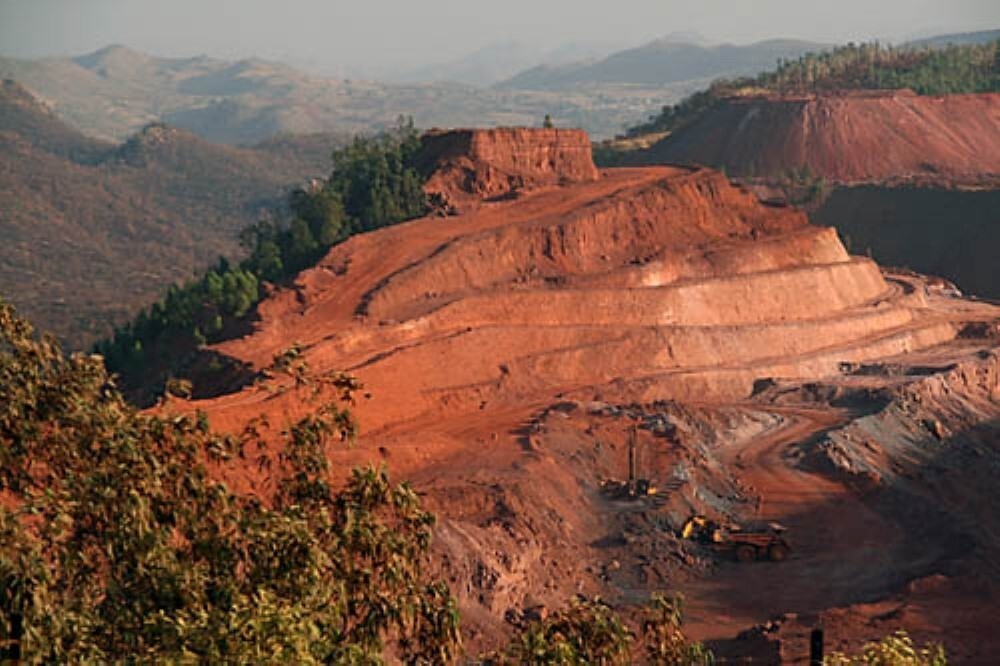
Kalahandi has significant mineral wealth, bauxite, iron ore, graphite, limestone. For most of its history, those minerals have left as raw material and returned as finished goods made elsewhere. The question of who benefits from a district's natural endowments is one of the oldest questions in development economics. Kalahandi is still answering it.