What Global Employers Get Wrong About Indian Talent
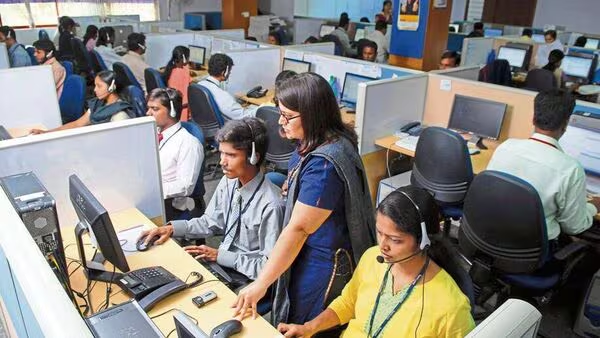
The credential read and the capability read are two separate exercises. After five years of placing Indian executives in global roles, I know which one most hiring processes skip.
78 results for "India"
The credential read and the capability read are two separate exercises. After five years of placing Indian executives in global roles, I know which one most hiring processes skip.
India produces more engineering graduates per year than the US has engineers in total. That is not a staffing opportunity. It is a structural shift in where capability lives.
India has had inflection points before. This one is different — because for the first time, multiple structural advantages are converging simultaneously: demographic, digital, geopolitical, and institutional. The question is whether the execution matches the opportunity.
India's technology story has three layers that are often conflated: the IT services legacy that built the industry, the consumer internet wave that created the unicorns, and the deep tech and SaaS wave that is now determining what comes next.
India has produced over 100 unicorns and the third-largest startup ecosystem in the world. What that number obscures is more interesting than what it reveals: who is building, what they are building, and whether the infrastructure for the next generation is actually in place.
Remote work did not create India's talent export. It accelerated it — and changed the terms. The shift from outsourcing to remote employment is not just a pricing story. It is a structural change in how global talent flows.
Projecting India's next decade requires holding two things simultaneously: genuine structural advantages that are real and compounding, and genuine execution risks that have derailed previous inflection points. Both are true. The outcome depends on which one wins.
The next chapter of India's growth will be written in cities most outsiders have never heard of. Indore, Surat, Coimbatore, Vadodara, Vizag, Jaipur — these are not minor cities. They are places with real economies, real talent, and an underappreciated capacity to absorb the next wave of investment that the saturated metros cannot.
India has built more infrastructure in the last decade than in the five decades before it combined. This is not a political claim — it is a measurable fact about roads, railways, ports, airports, and digital systems. What it means for the economy, and what is still missing, is the more interesting question.
Not the India of headlines or investor pitches. The one I have watched build itself in the in-between places.
Indian cities are being shaped by decisions being made right now. The window to get them right is shorter than most people realize.
The demographic dividend is real. But dividends require investment — and India's human capital investment remains unequal.
Why India is uniquely positioned to become an AI-first economy — and what that requires.
The 2016 data disruption did not just make the internet cheaper. It rewired what India could become.
India produces exceptional engineering talent. Finding a CTO within it requires understanding where that talent concentrates, what moves it, and why standard executive search approaches consistently miss the best candidates.
India produces some of the world's best engineers. Finding one who can lead an engineering organisation — not just build within one — requires understanding a specific talent gap that the Indian engineering market has not yet fully closed.
Finding a CTO in India requires understanding where the talent actually is, what moves it, and why the approaches that work in other markets consistently underperform in this one.
India's relationship with AI is different from the relationship that Silicon Valley assumes. The constraints are different, the opportunities are different, and the version of AI that matters most for India is not the version that dominates the global conversation.
India's executive talent pool is not a market to be accessed carefully from the outside. It is where some of the most capable operators in the world are currently working — and most global searches miss them for the same reasons.
India has world-class pharmaceutical clusters in Hyderabad, Pune, and Ahmedabad. Eastern India has none. That gap is also an opening — and Odisha is positioned to claim it.
Two thousand years ago, Kalinga controlled Indian Ocean trade from the eastern coast of India. The geography that made that possible has not changed. What we have done with it has.
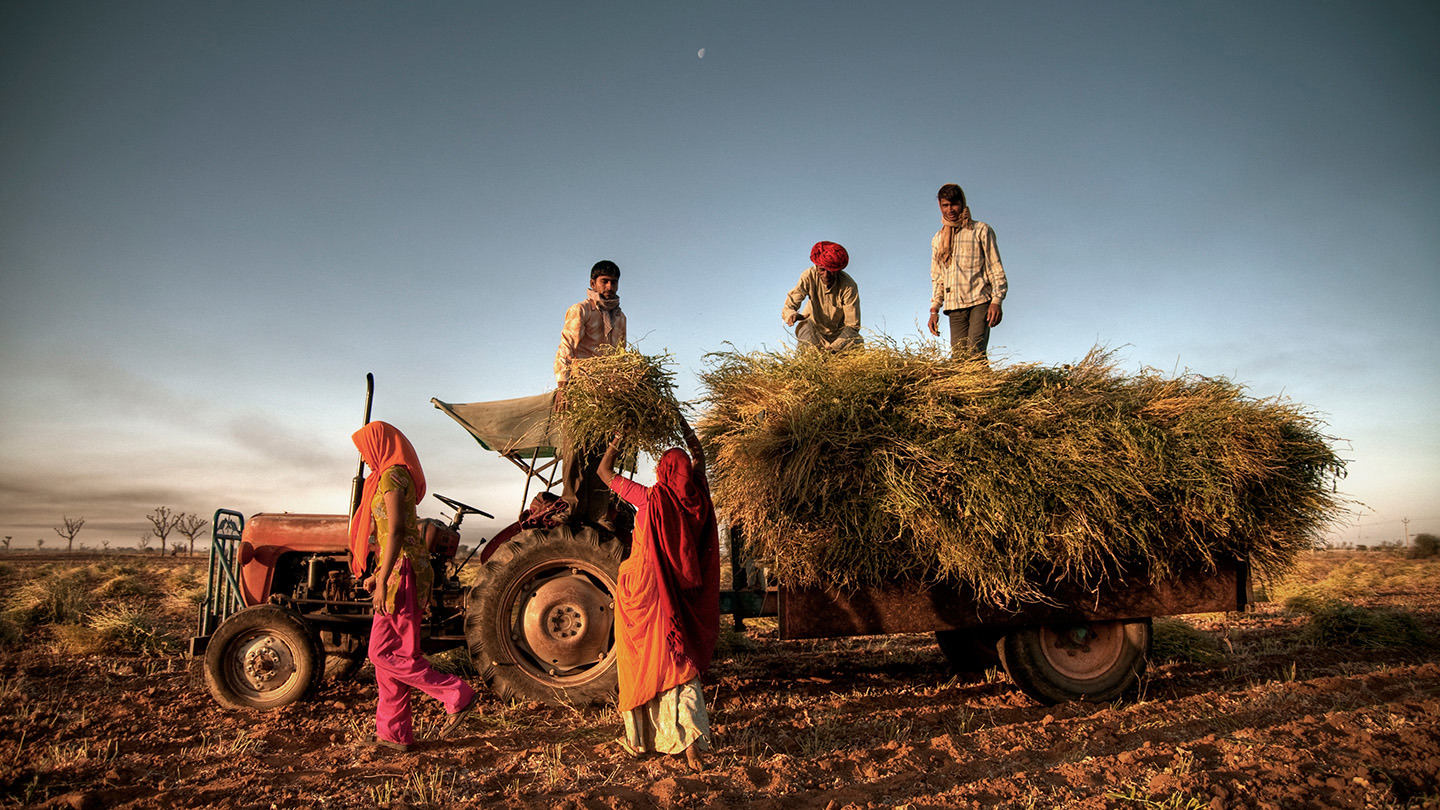
Rural India is not a single place. It is several hundred thousand distinct places, with different geographies, different crops, different castes, different distances from the nearest town with a decent school. The opportunity problem is as varied as the terrain.
The most underestimated talent in India is not in the cities. The cities just have better infrastructure for making it visible.
India is not a uniform opportunity landscape. It is a country of extraordinary concentration alongside extraordinary absence — where the same decade produces world-class engineers and districts with no functional schools. Understanding that distribution is the beginning of understanding what opportunity in India actually means.
In 2022, Manas Ranjan Majhi received the Indian Achievers Award for Entrepreneur of the Year. What it confirmed was more important than what it celebrated.
Growth that people cannot participate in is not development. India is learning this distinction in real time.
Everyone talks about the apps and the unicorns. The actually interesting stuff is the infrastructure underneath.
When a country of 1.4 billion people solves a problem, the solution tends to be unusually robust. And unusually relevant.
Odisha is one of India's most significant manufacturing states, and most people outside the industry don't know it. Steel, aluminium, chemicals, fertilisers, and a growing petrochemical corridor. This is the industrial base that funds everything else.
The things Kalahandi forces you to learn are not specific to Kalahandi. They are the things every constrained environment teaches — if you pay attention.
These two words are used interchangeably in Indian political discourse, and that confusion is doing real damage to how we think about love of country.
India built something the rest of the world is still trying to understand: open, interoperable digital rails that no single company owns.
Paradip Port is India's second-largest port by cargo volume. It sits on Odisha's coastline, handling over 130 million metric tonnes of cargo annually. And yet Odisha remains one of the countries least economically developed states. That gap between what Paradip handles and what Odisha captures from it is the central strategic question of Odisha's economic future.
The cheapest flight in India costs Rs.400. The flight to Kalahandi costs Rs.3,000. Same flight time. Seven times the price. That gap is not about aviation economics. It's about how India decides which places get to participate in the modern economy.
Odisha is not an afterthought in India's story. It is one of the original chapters. Understanding why it matters — historically, economically, and now — requires looking at the state on its own terms rather than through the lens of what it's not yet.
The average Indian lives to 72. But only about 58 of those years are spent in good health. That 14-year gap is not inevitable — and most of us are not thinking about it at all.
In 2023, HackerNoon recognised Majhi Group as a Startup of the Year in North America. What it means to win a global technology recognition while building from Odisha, India.
Countries with high state capacity can absorb shocks, build infrastructure, and compound development in ways that low-capacity states simply cannot.
Scale at this magnitude is not just a bigger version of building for fewer people. It changes the problem entirely.
Good policy is not the smartest analysis. It is the analysis that gets executed well enough to change outcomes for actual people.
The stories that make news are almost always the surface layer. The real story is the infrastructure underneath that made them possible.
Kalahandi has rivers. It has rainfall. It has fertile soil. It has everything a farming region needs — except the infrastructure to turn rainfall into reliable harvests. That gap between what the land has and what the land produces is one of the most fixable problems in Indian agriculture. And one of the least fixed.
Odisha's most overlooked district has waterfalls, sacred hills, royal history, and tribal culture that most of India has never heard of. That invisibility is both the problem and, for now, the charm.
Odisha produces more technical and professional talent than its local economy currently absorbs. The result is a diaspora distributed across Indian and global organisations — and a sourcing opportunity for companies willing to look.
Odisha's infrastructure story is one of genuine progress from a low base. Ports expanding, highways improving, rail connectivity growing, Bhubaneswar getting smarter. The gap with leading Indian states is narrowing, and the pace of investment is accelerating.
Odisha is not yet in the conversation about India's AI ecosystem. It should be. The inputs are strong — technical talent, cost structure, government intent, institutional density. What's missing is capital, senior AI talent, and a visible first win.
Odisha has a concentration of temples, wildlife, tribal culture, and coastline that should make it one of India's premier tourism destinations. It isn't, yet. The reasons are fixable. And the trajectory is changing.
Distributed teams are not remote teams with better Slack. They are a fundamentally different organizational model that requires different hiring, different communication, and different leadership. Most companies that try it fail not because the model is wrong, but because they apply co-located assumptions to a distributed reality.
AI is not just changing who does the work. It is changing what the work is worth. As AI tools raise the output floor for every knowledge worker, the question of what human talent commands — and why — is being rewritten in real time.
Everyone told me to move to Bangalore. I didn't. What I learned from building in Odisha is that the cost of not being in a hub is mostly overstated, and the benefits are almost never talked about.
For most people, Kalahandi's history begins and ends with the 1985 famine. That is like knowing Britain only through the Blitz. A place is not its worst decade. Kalahandi is ancient, complex, and has been building itself — quietly — for a very long time.
Kalahandi has new roads, new investment, and a NITI Aayog ranking. What it does not yet have is a reason for its best people to stay.
Everything about Kalahandi — the western Odisha district that holds significant mineral wealth, extraordinary natural landscapes, deep tribal culture, and more development potential than any single policy has yet managed to unlock.
Where you build shapes what you can build. Geography is not just a cost variable or a constraint — it is a strategic input that creates specific, compounding advantages when chosen deliberately.
First-generation founders carry specific advantages that consensus startup culture doesn't recognise — and specific blind spots that it doesn't warn them about. This framework maps both.
A place is not a gap. And the Kalahandi I grew up in is not the Kalahandi that appears in the data.
Odisha has the infrastructure inputs a startup ecosystem needs. What it is still building is the compounding layer — the density of capital, failure-tolerant culture, and peer networks that turns inputs into a self-sustaining ecosystem.
Odisha is systematically underestimated — not because it lacks substance, but because it lacks the visibility infrastructure that translates substance into perception. The gap between what the state is and what most people believe about it is large and narrowing.
Bhubaneswar has the infrastructure of a tech hub and the early indicators of one. Whether it becomes a self-sustaining technology ecosystem depends on factors that are currently in motion but not yet settled.
Odisha's growth story is broader than most people know. Steel and mining remain dominant, but technology, pharmaceuticals, ports and logistics, renewable energy, and tourism are all expanding in ways that are beginning to reshape the state's economic profile.
Odisha produces engineering and professional talent that is capable, underpriced relative to its quality, and motivated in ways that talent from saturated markets often isn't. Most companies haven't found it yet. That's the opportunity.
Odisha is known for things that most outsiders don't know about — and not yet known for things that are becoming increasingly significant. The gap between its actual profile and its perceived profile is one of the most interesting things about it.
Not because hardship builds character. But because certain environments select for a specific kind of operational capacity.
The geography of talent acquisition is changing faster than most hiring processes have adapted. The companies winning the talent competition are those that have updated their sourcing model for a world where borders matter less than they did five years ago.
Economic growth is necessary for development. But it is not a definition of it. Odisha has been growing. The harder question is what that growth has actually built.
What changes when infrastructure reaches a place that has spent decades waiting for it. And what the next decade actually depends on.
The case for Odisha as a business destination goes beyond cost arbitrage. It's about access to minerals, port infrastructure, a large and underutilised talent pool, and a government that is actively competing for investment. Here is the full case.
Opportunity alone is not enough. The question is whether individuals can convert opportunity into actual mobility. Most systemic interventions fail because they solve for opportunity without solving for the conditions that make mobility real.
Opportunity is not a single event. It is a chain — five links, each enabling the next. Understanding where chains break is how you design systems that close the gap between talent and potential.
Bhubaneswar has the talent pipeline, the cost structure, and the infrastructure foundation. The question is whether it can generate the ecosystem gravity that converts those inputs into an AI city.
Kalahandi's opportunity gap is not a mystery. It is the predictable output of systems that allocate investment based on what already exists, not what is possible.
The structural case for building in Kalahandi — and what has to change for that case to become obvious to people who haven't looked.
The most useful thing a place like Kalahandi teaches you is not about the place. It is about what happens inside people when something doesn't fit their picture of what is real.
The 184th interview, the shock of Delhi, and what I brought from Junagarh that no city gave me.
The state I grew up in has more going for it than most people realize — and a widening gap between what it is and what it could be.
Odisha has the inputs for a different trajectory. Whether it takes that trajectory is a question of policy, investment, and will.
Tourism is often treated as a soft economic story. The numbers tell a different one.
A place that most people encounter only through data, development reports, or passing reference. Here is what it actually is.